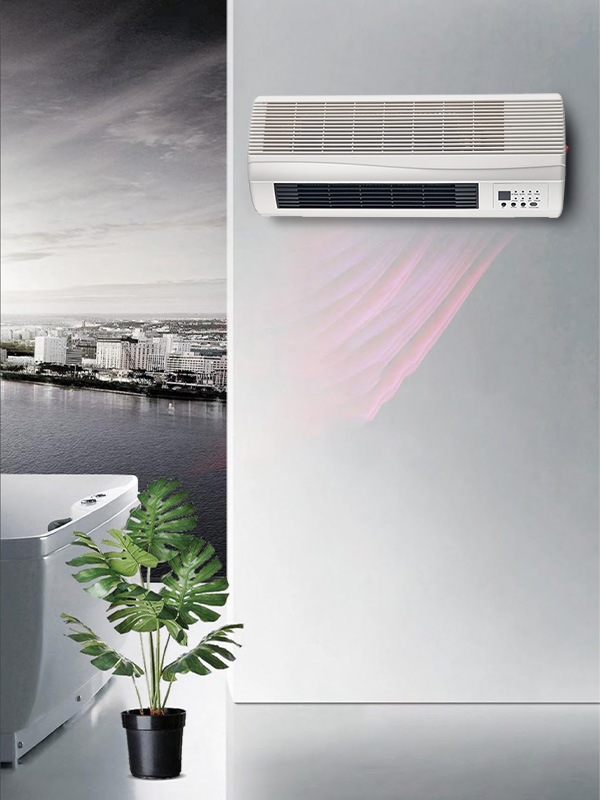
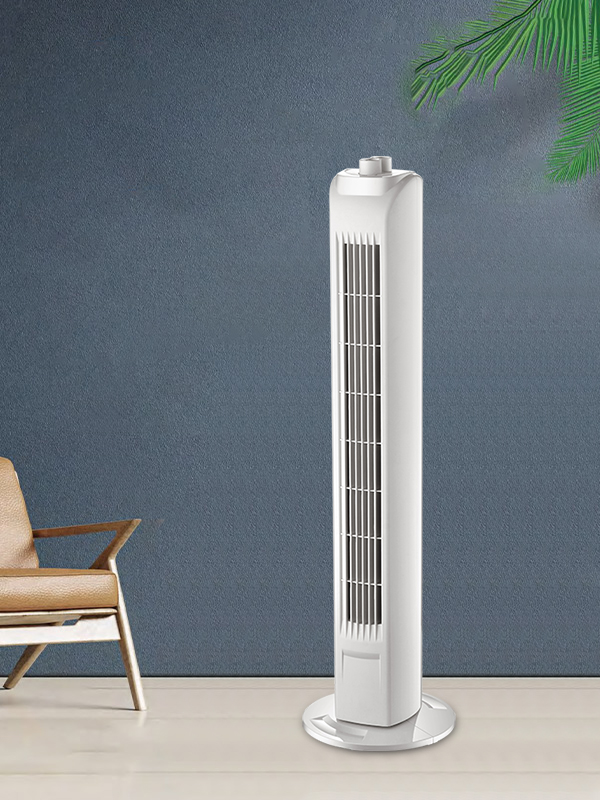
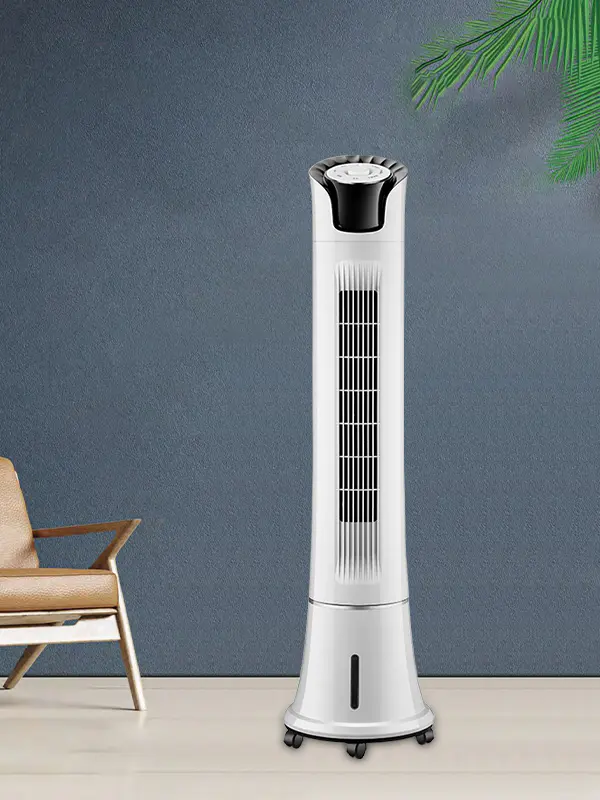
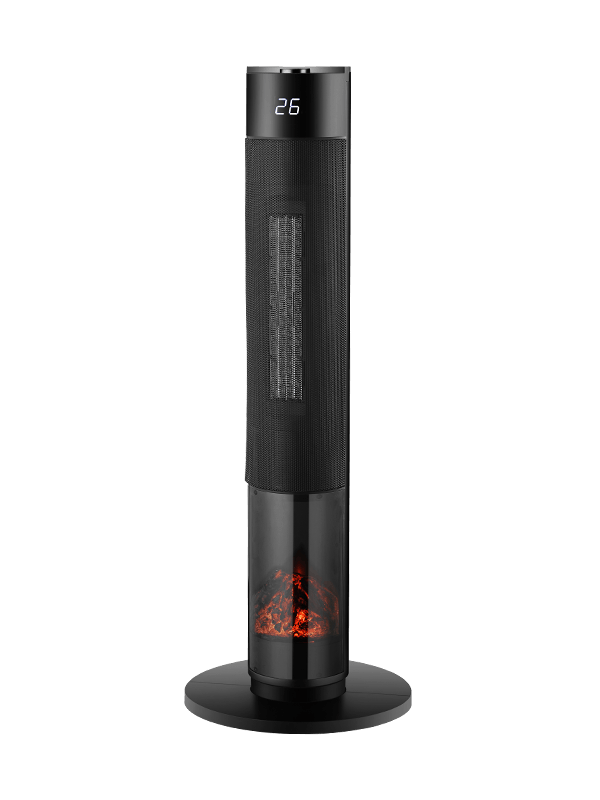
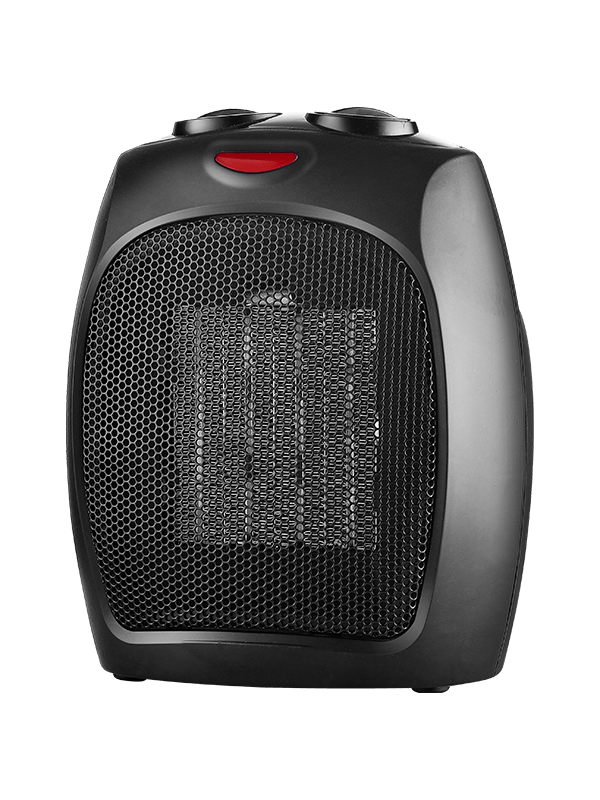
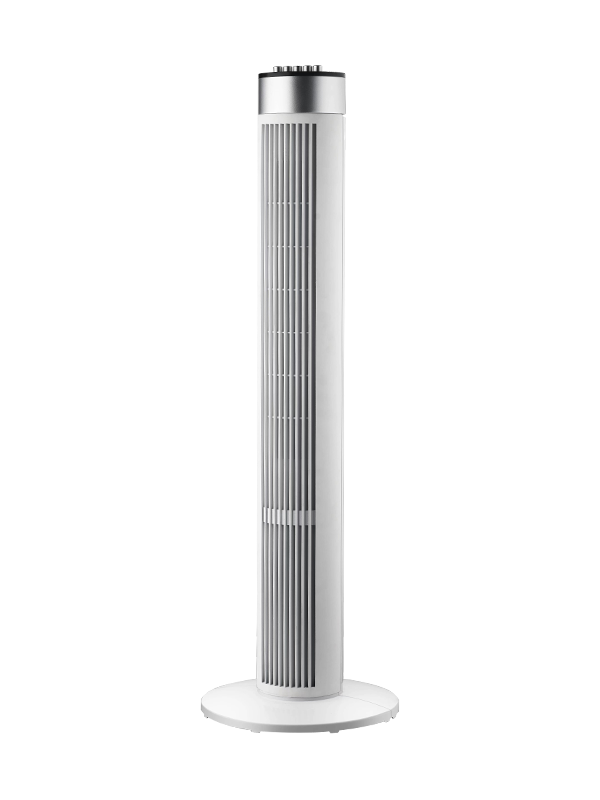
Fan heaters work by passing cold room air over a heated element — either a metal wire coil or a ceramic plate — and blowing the warmed air back into the room using an internal fan. The result is fast, directional heat that raises room temperature within minutes, unlike radiant heaters that warm objects and surfaces gradually. Electric fan heaters convert nearly 100% of electrical energy into heat, making them one of the most efficient portable heating options available.
The two dominant types — ceramic fan heaters and traditional electric fan heaters with wire coil elements — use the same basic airflow principle but differ significantly in how they generate heat, how quickly they respond, how safe they are to touch, and how long they last. Understanding those differences helps you choose the right heater and use it more effectively.
The Core Mechanism: How a Fan Heater Converts Electricity into Warm Air
Every fan heater — regardless of element type — operates on the same four-step cycle:
Air intake: A motorized fan draws cool ambient air in through vents at the rear or sides of the unit.
Heating: The air passes directly over or through the heating element — a resistive wire coil or a ceramic PTC (Positive Temperature Coefficient) block — which transfers thermal energy into the airstream.
Discharge: The heated air exits through a front grille, typically at velocities of 1–3 meters per second, projecting warmth across the room.
Thermostat regulation: An integrated thermostat monitors room temperature and cycles the element on or off to maintain the set level, preventing continuous energy draw.
This convective heating process is why fan heaters heat a room noticeably faster than oil-filled radiators or radiant bar heaters. A standard 2,000-watt fan heater can raise the temperature of a 15–20 m² room by 5–8°C within 10–15 minutes, compared to 30–45 minutes for a comparable oil radiator.
How Ceramic Fan Heaters Work: PTC Technology Explained
Ceramic fan heaters use a heating element made from barium titanate-based PTC ceramic — a material with a unique electrical property: its resistance increases sharply as its temperature rises. This self-regulating characteristic is the defining feature of ceramic heating technology.
The PTC Self-Regulation Mechanism
At room temperature, PTC ceramic conducts electricity readily and heats up quickly. As the element approaches its design temperature — typically 120°C to 160°C for most consumer ceramic heaters — its electrical resistance rises exponentially, automatically reducing current flow and preventing further temperature increase. This means:
The element never overheats, even if airflow is partially blocked.
No separate thermal cutout fuse is needed as a primary safety mechanism.
Energy consumption drops naturally once the target temperature is reached, improving efficiency during sustained use.
The ceramic element is typically formed into a honeycomb or ribbed block shape to maximize surface area — a 100 cm² ceramic block can have an effective heat-transfer surface area of 400–600 cm² when accounting for its internal channels. This is why ceramic heaters can deliver high heat output at relatively low element surface temperatures.
Why Ceramic Elements Run Cooler on the Surface
Because heat is distributed across a large, efficient surface area and the PTC mechanism limits maximum temperature, the outer surface of a ceramic element typically operates at 80°C–130°C — roughly half the surface temperature of a wire coil element under similar conditions. This is why accidental contact with a ceramic fan heater's internal element is far less likely to cause severe burns than contact with a glowing wire coil.
How Traditional Electric Fan Heaters Work: Wire Coil Elements
Traditional electric fan heaters use a nickel-chromium (nichrome) resistance wire wound into a coil and mounted on a mica or ceramic former. When electrical current flows through the nichrome wire, its high electrical resistance converts the energy directly into heat — a process called Joule heating.
Unlike PTC ceramic, nichrome wire does not self-regulate. Its resistance increases only marginally with temperature, meaning it will continue to draw near-constant current and heat up indefinitely unless controlled by an external thermostat or thermal cutout. Wire coil elements in fan heaters commonly reach surface temperatures of 200°C–400°C at full power — high enough to glow faintly orange in some designs.
Advantages of the Wire Coil Design
Lower manufacturing cost: Nichrome wire elements are significantly cheaper to produce than PTC ceramic blocks, which is why wire coil fan heaters are typically priced 20–40% lower than ceramic equivalents at the same wattage.
Instant heat output: Wire coil elements reach operating temperature in under 5 seconds, delivering maximum heat output almost immediately from cold.
Simple repairability: Wire elements are straightforward to test and replace if they burn out, though most consumers replace the unit rather than repair it.
Ceramic vs. Electric Fan Heater: A Direct Comparison
Both heater types use a fan and deliver convective warmth, but their performance, safety profile, and running costs differ in ways that matter for everyday use.
Feature
Ceramic Fan Heater
Wire Coil Electric Fan Heater
Element surface temperature
80°C–130°C
200°C–400°C
Self-regulating temperature
Yes (PTC)
No (requires external thermostat)
Fire risk if airflow blocked
Low
Higher without thermal cutout
Warm-up speed to full output
10–30 seconds
Under 5 seconds
Energy use at sustained temp
Drops automatically (PTC effect)
Constant until thermostat cycles off
Air quality / humidity impact
Minimal drying effect
Can dry air more noticeably
Typical product lifespan
5–10 years
3–7 years
Typical price range (1,500–2,000W)
$30–$120
$15–$60
Table 1: Key performance and safety differences between ceramic and wire coil electric fan heaters.
Energy Efficiency: What Fan Heaters Actually Cost to Run
All electric heaters — fan, oil-filled, or infrared — convert electricity to heat at close to 100% efficiency. There is no combustion waste, no flue losses, and no standby pilot flame. The question of "efficiency" for fan heaters is therefore not about energy conversion but about how effectively the heat reaches and stays in the space you want to warm.
Running cost is simply a function of wattage, usage duration, and electricity tariff:
At a typical US electricity rate of $0.16/kWh, a 1,500-watt fan heater costs approximately $0.24 per hour to run at full power. A 2,000-watt model costs around $0.32 per hour. Running a 1,500W heater for 4 hours daily over a 30-day month costs roughly $28.80.
Where ceramic heaters gain a practical efficiency advantage is in thermostat cycling: because the PTC element reduces its own power draw as it reaches operating temperature, the actual energy consumed during sustained use is often 15–25% lower than the nameplate wattage suggests, compared to a wire coil heater that draws nearly full wattage until the thermostat switches it off entirely.
Safety Features Built Into Modern Fan Heaters
Portable heaters are among the leading causes of home fires in the US and UK. Understanding which safety features are standard versus premium helps you evaluate any model before buying.
Overheat Protection (Thermal Cutout)
A bimetallic strip or electronic sensor monitors internal temperature. If the heater's core temperature exceeds a safe threshold — typically around 90°C at the housing — the cutout disconnects power automatically. This is an essential feature, not a premium one, and any heater without it should be avoided.
Tip-Over Switch
A gravity-activated or mechanical switch in the base cuts power within 1–2 seconds if the heater is knocked over. Required by safety standards in most markets, including UL 1278 in the US and EN 60335-2-30 in Europe. Always verify this feature is present before placing a heater in a space used by children or pets.
Cool-Touch Housing
Better-designed fan heaters — particularly ceramic models — maintain outer casing temperatures below 60°C even during extended operation, reducing burn risk from accidental contact. Wire coil heaters often exceed 80°C on the grille surface directly in front of the element.
Child Lock and Timer Functions
Mid-range and premium fan heaters increasingly include programmable timers that shut the unit off automatically after 1–8 hours, and child lock functions that prevent settings being changed once programmed. A timer that switches the heater off after 2 hours of overnight use can reduce both energy costs and fire risk significantly.
Which Fan Heater Type Is Right for Your Situation
Neither type is universally better. The right choice depends on your specific use case, space, and priorities.
Use Case
Best Choice
Reason
Household with young children or pets
Ceramic fan heater
Lower element temperature, self-limiting heat, cool-touch housing
Office desk or personal workspace
Ceramic fan heater (compact)
Quiet fan, sustained warmth, energy reduction at temperature
Quick blast heat for bathroom or garage
Electric fan heater (wire coil)
Fastest heat-up, lower cost, short-duration use
Budget-limited buyer, occasional use
Electric fan heater (wire coil)
Lower purchase price, adequate for infrequent use
All-day heating in living area
Ceramic fan heater
Lower sustained energy draw, longer element lifespan
Allergy-sensitive household
Ceramic fan heater with filter
Lower element temp reduces dust-burn odor; HEPA filter option available
Table 2: Fan heater type recommendations by common use case.
Fan Heater Noise: What to Expect and How to Minimize It
All fan heaters produce noise from the motor and airflow. Typical noise levels range from 35 dB (quiet) to 65 dB (audible conversation level) depending on fan speed and housing design.
Low-noise ceramic heaters designed for bedroom or office use typically operate at 40–45 dB on the low fan setting — roughly equivalent to a quiet library.
Standard wire coil fan heaters on full power commonly produce 55–65 dB, comparable to normal conversation or a running dishwasher — distracting in a quiet workspace.
Noise increases with fan speed, dust accumulation on the intake grille, and bearing wear in older units. Cleaning the intake filter every 2–4 weeks noticeably reduces both noise and energy use.
If noise is a priority, look for models that specify a "silent" or "night mode" setting and check for independent dB measurements in product reviews rather than relying solely on manufacturer claims.
Common Misconceptions About Fan Heater Performance
Several widely repeated beliefs about fan heaters are either inaccurate or only partially true:
"Higher wattage always means faster heating"
Wattage determines maximum heat output, but room size, insulation quality, and starting temperature all affect how quickly a space reaches target temperature. A 1,500W heater in a well-insulated 10 m² room will heat faster than a 2,000W heater in a draughty 25 m² room. Match the heater's wattage to the room volume: a rough guide is 10 watts per square foot (or 100 watts per square meter) for average insulation.
"Fan heaters dry out the air dangerously"
Fan heaters do not remove moisture from air — they heat it. Warm air can hold more moisture than cool air, so relative humidity drops as temperature rises, which can feel drying. This effect is the same with any heating system and is not unique to fan heaters. A room at 15°C and 60% relative humidity moved to 22°C will drop to roughly 35–40% relative humidity without adding moisture — below the recommended 40–60% range. A small humidifier used alongside any heater addresses this effectively.
"Ceramic heaters use less electricity than other types"
A 2,000W ceramic heater draws 2,000W at full load — the same as any other 2,000W electric heater. The ceramic advantage is in partial-load efficiency: the PTC element draws less than its rated wattage during steady-state operation, which reduces actual consumption during sustained use. At full blast from cold, a ceramic and wire coil heater of identical wattage draw identical power.
Maintenance Tips to Extend Fan Heater Life and Efficiency
Fan heaters require minimal but regular maintenance to operate safely and efficiently across multiple seasons.
Clean the intake grille every 2–4 weeks: Dust on the grille restricts airflow, forcing the fan motor to work harder, increasing noise and energy consumption, and potentially triggering the overheat cutout prematurely. Use a soft brush or vacuum attachment.
Never cover or partially block the intake or outlet: Even partial obstruction can raise internal temperatures enough to damage the element or housing. Maintain at least 30 cm clearance on all sides during operation.
Store correctly in off-season: Clean the unit, allow it to cool completely, and store in a dry location. Moisture ingress during storage is a leading cause of early motor failure.
Check the power cord annually: Inspect for cracking, kinking, or discoloration near the plug. A damaged cord on a high-wattage appliance is a significant fire risk; replace the unit rather than attempt cord repair.
Do not use extension cords unless rated for the load: A 2,000W heater draws approximately 8.7 amps at 230V (or 16.7 amps at 120V). Use only extension cords rated for at least 13 amps (UK) or 20 amps (US) and keep the cord fully uncoiled to prevent heat buildup.

 en
en  English
 中文简体
中文简体 Español
 عربى
عربى русский