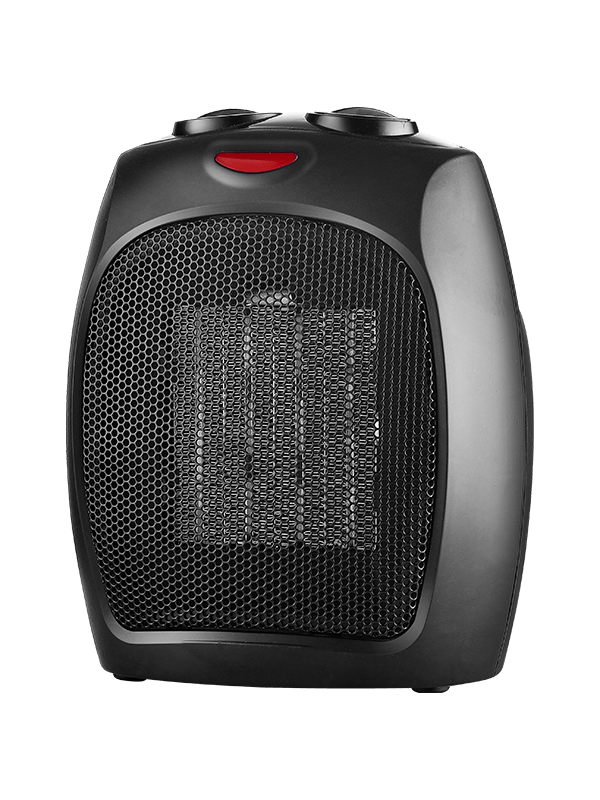
Running a 1500-watt heater for 8 hours costs approximately $1.44 per day, based on the U.S. average electricity rate of $0.12 per kWh. Over a month of nightly use, that adds up to roughly $43.20. These numbers shift depending on your local utility rate, thermostat habits, and the heater model — but this baseline gives you a reliable starting point for budgeting your heating costs.
Whether you're using a portable space heater or a wall mounted heater, understanding the real cost of operation helps you make smarter decisions about supplemental heating — and potentially cut your energy bill without sacrificing comfort.
The Formula: How to Calculate Heater Running Costs
Calculating the cost of running any electric heater is straightforward once you know three values: wattage, hours of use, and your electricity rate (cost per kWh).
The formula is:
Cost = (Watts ÷ 1000) × Hours × kWh Rate
For a 1500-watt heater running 8 hours at $0.12/kWh:
(1500 ÷ 1000) = 1.5 kW
1.5 kW × 8 hours = 12 kWh consumed
12 kWh × $0.12 = $1.44 per session
If your electricity rate is higher — say $0.20/kWh as seen in states like California, New York, or Hawaii — that same 8-hour session costs $2.40. In states with cheaper power like Louisiana or Arkansas (around $0.09/kWh), it drops to just $1.08.
Cost Breakdown by Electricity Rate and Usage Period
The table below shows what it costs to run a 1500-watt heater for 8 hours across different electricity rates and time frames — from a single session to an entire winter season (90 days).
kWh Rate
Cost per 8 Hrs
Monthly (30 days)
Winter Season (90 days)
$0.09 (low)
$1.08
$32.40
$97.20
$0.12 (U.S. avg.)
$1.44
$43.20
$129.60
$0.16 (mid-range)
$1.92
$57.60
$172.80
$0.20 (high)
$2.40
$72.00
$216.00
$0.28 (premium)
$3.36
$100.80
$302.40
Running cost of a 1500W heater at 8 hours/day across different electricity rates and usage periods
As the table shows, electricity rates have a dramatic impact. Residents in high-cost states can pay nearly three times more for the same heating session as those in low-cost states.
Wall Mounted Heater vs. Portable Heater: Does the Type Affect Cost?
The heater type itself does not change the energy math — a 1500-watt wall mounted heater and a 1500-watt portable space heater consume the same amount of electricity at full power. However, the type of heater significantly affects how efficiently that energy is used, which changes your real-world costs.
Wall Mounted Heaters
A wall mounted heater is permanently installed and typically features a built-in thermostat that cycles the heater on and off to maintain a set temperature. This thermostat-controlled operation means the heater rarely runs at full 1500W continuously. In practice, a well-thermostatted wall heater may only run at full power 40–60% of the time, effectively reducing consumption to 720–900 Wh per hour.
Over an 8-hour period, this translates to roughly 5.8–7.2 kWh instead of 12 kWh — a meaningful saving. At $0.12/kWh, this brings the real cost down to $0.70–$0.86 per 8-hour session.
Portable Space Heaters
Portable units vary widely. Budget models often lack accurate thermostats and may run continuously at full power. Higher-end models with digital controls and occupancy sensors can rival wall-mounted efficiency. The key variable is whether the heater has effective thermostat cycling.
Additional distinctions between wall mounted and portable heaters include:
Placement: Wall mounted heaters are positioned at optimal height for heat distribution; portable units on the floor may heat inefficiently.
Zoning: Wall mounted heaters are ideal for permanent zone heating in a single room, reducing whole-home HVAC load.
Safety: Wall mounted units eliminate tip-over risks and reduce fire hazard associated with portable models near furniture or drapes.
Installation cost: A hardwired wall mounted heater typically costs $150–$400 installed, adding to your upfront investment.
What Factors Actually Drive Up Your Heating Bill
Beyond electricity rates and heater type, several real-world factors determine how much your heater actually costs to run.
Room Size vs. Heater Capacity
A 1500-watt heater is designed to comfortably heat a space of approximately 150 square feet (the standard rule of thumb is 10W per sq. ft.). If you're using a 1500W unit in a 300 sq. ft. room, it will run almost continuously to compensate, pushing costs toward the maximum. Using the right-sized heater for the space is one of the most effective ways to control operating costs.
Insulation and Drafts
A poorly insulated room loses heat rapidly, forcing the heater to work harder and longer. Studies by the U.S. Department of Energy suggest that air sealing and insulation can reduce heating costs by 10–20%. Even simple measures like door draft stoppers and heavy curtains noticeably reduce the load on any heater.
Thermostat Set Point
Every degree Fahrenheit you lower your thermostat reduces heating energy use by approximately 1–3%. Setting your wall mounted heater to 68°F instead of 72°F over an 8-hour period can save a noticeable amount over a winter season.
Outdoor Temperature
The colder it is outside, the greater the temperature differential your heater must overcome. A heater running in a 20°F winter night will cycle far more frequently than one used in a 45°F early-spring evening, even in the same room.
Wattage Setting
Many heaters offer a low setting (typically 750W) in addition to the full 1500W. Running on low setting for 8 hours consumes only 6 kWh — exactly half — which costs $0.72 at the U.S. average rate. If your room only requires moderate supplemental heat, using the lower setting can halve your operating cost.
Comparing Heater Wattages: Is 1500W the Right Choice?
Not all electric heaters are 1500W. Understanding how wattage affects both heating capacity and running costs helps you choose the most appropriate unit for your needs.
Wattage
Ideal Room Size
8-Hr kWh
8-Hr Cost (@$0.12)
500W
~50 sq. ft.
4 kWh
$0.48
750W
~75 sq. ft.
6 kWh
$0.72
1000W
~100 sq. ft.
8 kWh
$0.96
1500W
~150 sq. ft.
12 kWh
$1.44
2000W
~200 sq. ft.
16 kWh
$1.92
Comparison of electric heater wattages: room coverage and 8-hour operating costs at the U.S. average electricity rate
1500W strikes a balance between heating capacity and cost. It's powerful enough to serve as the primary heat source in a bedroom or small living area, while remaining within the capacity of a standard 15-amp household circuit — an important safety consideration.
How a Wall Mounted Heater Can Save Money Compared to Central Heating
While running a 1500W heater at full power all day would be expensive, using a wall mounted heater strategically as a zone heating solution can actually lower your total energy bill compared to heating your entire home with central HVAC.
Consider this scenario: Your central gas or heat-pump system heats a 2,000 sq. ft. home to 70°F overnight. Instead, you lower the main thermostat to 60°F and use a wall mounted heater only in the bedroom where you sleep. The heater heats just 150 sq. ft. rather than 2,000 sq. ft. — a 93% reduction in heated volume. Even accounting for the electric heater's cost, total energy expenditure is often lower.
The U.S. Department of Energy endorses this zone-heating approach, estimating potential savings of up to 3% per degree you lower the central thermostat. Dropping from 68°F to 60°F overnight (an 8-degree reduction) while zone-heating one bedroom can translate to meaningful annual savings.
Best practices for maximizing wall mounted heater efficiency:
Install in rooms you occupy most, especially bedrooms and home offices.
Use a programmable or smart thermostat to heat only during occupied hours.
Close the door to retain heat in the target room.
Lower central heating by at least 5–8°F to ensure the zone approach is a net savings.
Choose a model with a built-in timer to avoid unnecessary overnight operation.
Estimating Your Annual Cost: A Practical Scenario
To make the numbers tangible, here's a realistic annual cost estimate for a homeowner in the U.S. Midwest using a wall mounted heater in a bedroom:
Heating season: October through March = approximately 180 days
Daily usage: 8 hours overnight
Estimated thermostat cycling: heater runs at full power ~50% of the time = effective 750W average draw
Compare this to the cost of heating the entire home with gas: the U.S. Energy Information Administration reports the average Midwest household spends approximately $600–$900 per heating season on natural gas alone. Supplementing with zone heating can meaningfully offset that figure while maintaining comfort in key rooms.
5 Practical Tips to Reduce 1500W Heater Running Costs
You don't have to sacrifice warmth to lower your bill. These targeted strategies can reduce the cost of running your 1500-watt heater without making the room uncomfortable.
Use the 750W low setting when possible. If a lower heat level maintains comfort, it cuts energy consumption — and costs — exactly in half.
Set an accurate thermostat target. A wall mounted heater with a precise thermostat cycles efficiently. Aim for 65–68°F rather than 72°F to reduce on-time.
Pre-heat strategically. Run the heater at full power for 30 minutes before bedtime, then lower the thermostat. The thermal mass of the room retains heat longer than people expect.
Seal drafts around doors and windows. Reducing heat loss means the heater reaches target temperature faster and cycles off sooner.
Use a smart plug or timer. Automatically shut off the heater after 6 instead of 8 hours if the early morning hours are less critical — that alone saves 25% of daily operating cost.
Is Running a 1500W Heater for 8 Hours Worth It?
At $1.44 per session (U.S. average), running a 1500-watt heater for 8 hours is affordable for most households as supplemental heating. The value proposition improves significantly when used as zone heating to offset central system costs, or in situations where central heating isn't an option — such as a converted garage, a detached home office, or an addition without ductwork.
A wall mounted heater adds long-term value in these scenarios: it's permanently installed, aesthetically cleaner than a portable unit, and typically has a longer operational lifespan — often 10–20 years for quality hardwired models vs. 3–5 years for most portable heaters.
The cost becomes less justifiable only if the heater is running unnecessarily in an unoccupied room, or if it's undersized for the space and running continuously without achieving comfort. Matching the heater to the room, insulating adequately, and using thermostat controls are the three decisions that most directly determine whether your $1.44-per-day investment delivers genuine value.

 en
en  English
 中文简体
中文简体 Español
 عربى
عربى русский