 en
 English
 中文简体
 Español
 عربى
 русский

News
Home / News / Industry News / How Heaters Work in Home: A Complete Guide to Heating Systems and Efficiency
We are a professional heater supplier.
Content
Few things feel as simple as turning on a heater on a cold morning. Yet behind that instant warmth is a carefully balanced process of physics and engineering. Whether you rely on a central furnace, a boiler, or a portable space heater, the basic question is the same: how does heat get from the energy source into your living space? Understanding that process will help you choose the right system, run it efficiently, and keep it safe.
At its core, heating a home is about moving heat. Heat naturally flows from warmer to cooler, and every heater uses one or more of three mechanisms—conduction, convection, and radiation—to bring that warmth to you. As a manufacturer with decades of experience building heating appliances, we have learned to respect these principles in every product we design. You can read more about our approach to heater manufacturing if you want the background story.
Conduction is the transfer of heat through direct contact. If you touch a hot metal surface, heat moves by conduction. In a house, conduction matters when heat passes through walls and floors, but it is rarely the main way a room warms up.
Convection is the movement of heat through air or liquid. Warm air expands, becomes lighter, and rises, while cooler air falls to take its place. This creates a natural circulation loop. Most home heaters rely on convection, whether they are baseboard units, wall panels, or fan-forced heaters. A fan simply speeds up the loop.
Radiation transfers heat directly through infrared waves. It does not need air to travel, which is why a radiant heater can warm you even if there is a slight draft in the room. The sun is the most familiar example of radiant heat.
Central heating in many homes uses a forced air furnace. The furnace burns natural gas, propane, or heating oil, or it uses an electric element, to heat a metal heat exchanger. A blower fan then pushes air across the heat exchanger and sends the warmed air through a network of ducts. The air finally enters each room through floor or wall registers.
The process sounds compact, but it involves several control steps. The thermostat senses the room temperature and sends a signal to the furnace to cycle on and off. As the blower runs, cooler air in the room gets pulled into the return ducts and recirculated. This is why replacing or cleaning air filters regularly matters: restricted airflow makes the system work harder and wastes energy.
Heat pumps are a close cousin of furnaces. Instead of generating heat by burning fuel, they move heat from the outside air or ground into the home, using refrigerant and a reversing valve. In very cold climates, many heat pumps have backup electric resistance heaters to keep up with demand.
Boiler-based systems take a different route. Instead of heating air directly, a boiler heats water or produces steam, then circulates it through pipes to radiators, baseboard convectors, or tubing embedded in the floor. The radiators and floor surfaces release heat partly by convection and partly by radiation, creating a stable, comfortable warmth.
Hydronic underfloor heating is especially popular because it distributes heat evenly across a large area. The warm floor rises gently, avoiding the cold spots that can occur with forced air. Boilers can run on gas, oil, wood pellets, or electricity, and modern condensing models recover extra heat from exhaust gases.
Radiant electric panels are a simpler version of the same idea. They warm a solid surface, which then radiates heat into the room. This can feel more natural than blowing air, and it is silent in operation.
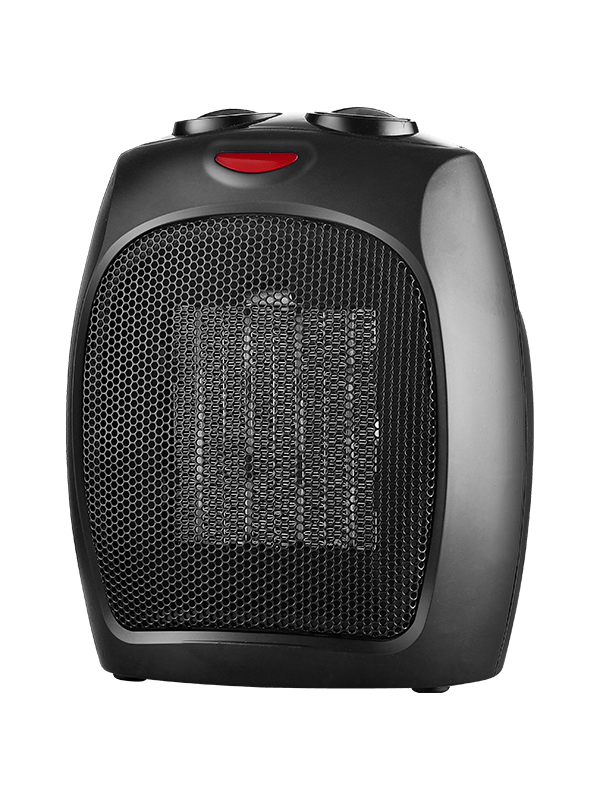
Electric resistance heating is one of the most straightforward ways to warm a space. When current flows through a resistive element, the element gets hot. In a fan heater, a motor-driven fan blows air across that element and pushes it into the room. With no combustion involved, the whole process is clean on a room level and efficient at the point of use.
PTC ceramic heaters improve on this basic design. PTC stands for positive temperature coefficient, which describes a special ceramic material whose electrical resistance rises as its temperature rises. When the element gets close to its designed limit, it naturally restricts its own power output. If the heater gets too hot, it backs off; when it cools down, it resumes heating. This self-regulating behaviour reduces the risk of overheating and helps maintain a steadier room temperature.
Because PTC elements are so well suited to home use, they appear in many of our portable and fixed heaters. You can see a practical example in our detailed guide to how a PTC heater works.
| Heater type | Heating element | Heat delivery | Best suited for |
|---|---|---|---|
| Fan heater | Metal coil or PTC | Forced convection | Quick warm-up in small rooms |
| PTC ceramic heater | Self-regulating ceramic | Forced convection | Steady whole-room warmth |
| Wall-mounted heater | PTC ceramic or coil | Convection + radiation | Fixed heating in bedrooms and living spaces |
| Infrared heater | Quartz or carbon | Radiant | Warming people and objects directly |
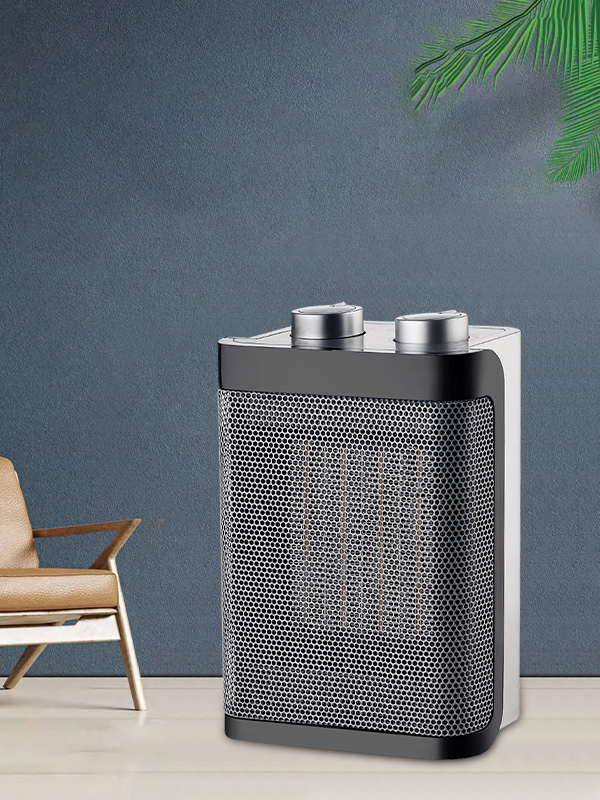
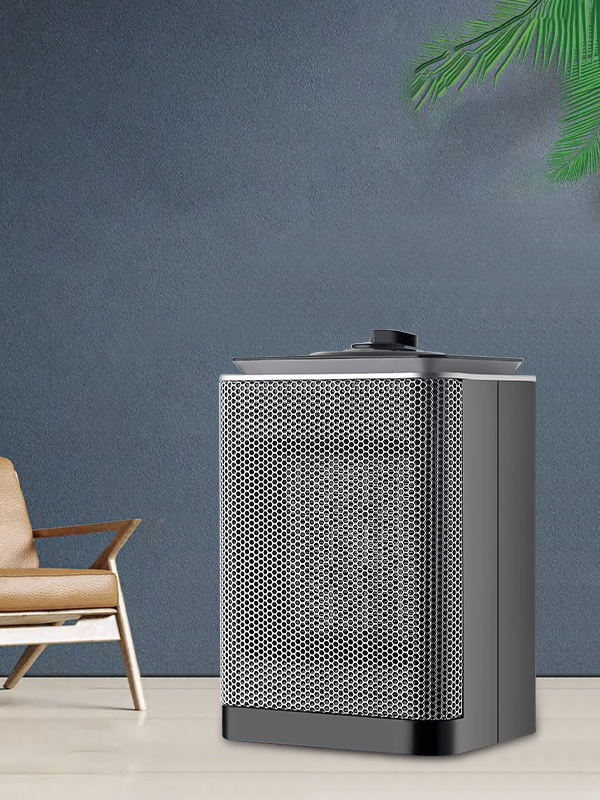 Portable PTC Heater with Oscillation and Adjustable ThermostatThis compact heater offers two power levels, fan mode for summer, and safety features like tip-over protection, making it a versatile portable option for any room.View Product →
Portable PTC heaters bring that same technology to any room in the house, so you can move warmth where you need it without installing anything.
Wall-mounted heaters use the same basic physics as portable units, but their fixed position changes how the heat spreads. Mounted at mid-wall height, a heater can push warm air upwards and outwards, letting convection work with gravity to distribute warmth through the room. Many wall-mounted models use PTC ceramic elements for self-regulating heat, and add features such as LED displays, timers, remote controls, and energy-saving modes.
Installation generally requires securely fixing the heater to the wall and connecting it to a suitable power supply. It is also worth checking the clearance around the heater; the manufacturer's guidelines will specify how much space to leave below and to the sides so that air can flow freely.
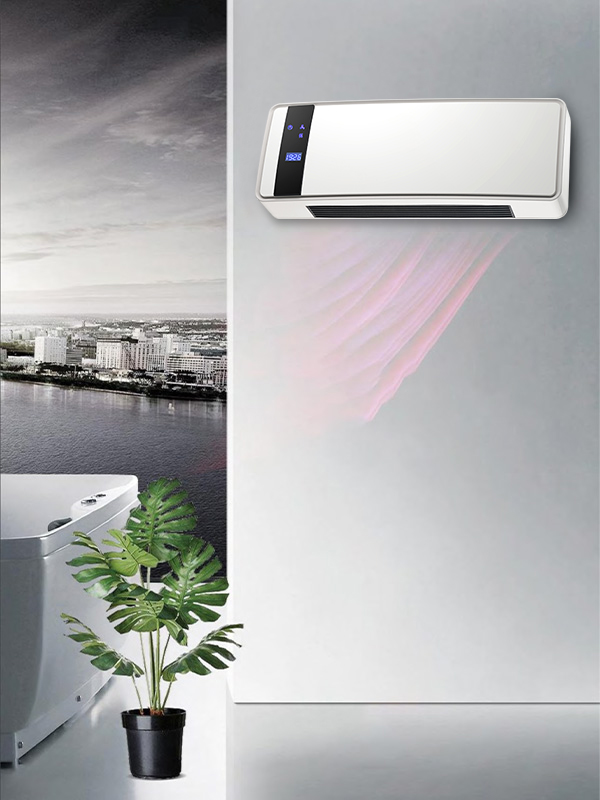 Wall-Mounted PTC Ceramic Heater with Timer and Remote ControlWith 1000W/2000W settings, IP23 moisture protection, and programmable weekly timer, this model suits bathrooms while saving floor space through wall mounting.View Product →
Bathrooms are a special case for heating because they combine a small space with high humidity and the risk of splashing water. A bathroom heater works on the same fan-forced convection principle, but it must be designed with moisture protection in mind. Wall-mounted units save valuable floor space, and many include a built-in towel rack so you can dry towels while the room warms.
When choosing a bathroom heater, check the IP rating and confirm that the model is approved for bathroom installation. For the best comfort, look for a heater with an adjustable thermostat and a timer, so you can set it to warm the room before you step out of the shower and then switch it off automatically.
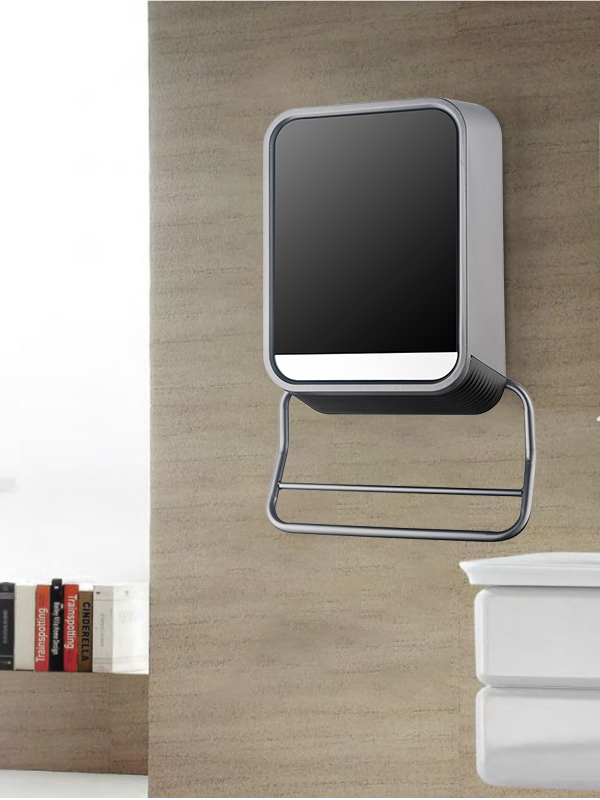 Waterproof Bathroom Heater with Towel Rack and ECO ModeFeaturing touch controls, a towel rack, and IP23 rating, this glass-panel heater provides programmable warmth and energy savings, ideal for humid bathroom spaces.View Product →
A heater is only as good as the controls that run it. A standard thermostat simply switches the heater on and off to hold a target temperature. More advanced thermostats and timers let you set different temperatures at different times of day, so you are not heating the house while you are asleep or away. This is where the largest energy savings come from.
Safety features are equally important. Look for overheat protection, which switches the heater off if the internal temperature climbs too high, and a tip-over switch on portable models, which does the same if the heater falls. For wet rooms, waterproof construction and a suitable IP rating are non-negotiable.
When you are ready to choose a heater for a specific room, keep these points in mind:
Understanding how heaters work in home doesn't require an engineering degree. It simply helps to know whether you are heating air, water, or surfaces, and which technology does that job best for your space.
how efficient are space heaters: Applications, Selection Criteria, and Practical Guidance
2026-10-20Your email address will not be published. Required fields are marked *
Copyright © Cixi BEILIGE Electric appliance Co.,Ltd. All Rights Reserved