 en
en  English
 中文简体
中文简体 Español
 عربى
عربى русский
News
Home / News / Industry News / How Many Amps Does a Heater Use? Wattage to Amps Explained for Home Heating
We are a professional heater supplier.
Content
A 1,500-watt electric heater plugged into a 120-volt outlet draws 12.5 amps — right at the safe working limit of a standard 15-amp household circuit. That single number explains why the same heater can run for hours without trouble, then trip the breaker the moment a hair dryer or vacuum cleaner starts up somewhere else on the same wiring. In general, plug-in heaters draw anywhere from roughly 4 to 15 amps, and the exact figure comes down to two values you can find in seconds: the wattage on the rating label and the voltage of your supply. Once you understand how those numbers relate, choosing a heater that warms the room without overloading the circuit becomes simple arithmetic rather than guesswork.
The conversion takes one line of arithmetic: amps = watts / volts. Divide the heater's rated wattage by the voltage at the outlet, and the result is the current it pulls at full power. Because a heating element is an almost purely resistive load, this straightforward division is accurate without any correction factors.
A typical 1,500-watt model shows how much the supply voltage matters. At 120 volts, 1,500 divided by 120 equals 12.5 amps. At 230 volts, the nominal standard across Europe and much of Asia, the same heater draws about 6.5 amps. At 240 volts, common on North American high-power circuits, it drops to 6.25 amps. The heater produces identical heat in each case; only the current changes, because the voltage does.
The rating label on the base or plug usually lists wattage and voltage, and often the amperage directly. If a heater offers two power settings, calculate both: a 750/1500-watt unit pulls 6.25 amps on low and 12.5 amps on high at 120 volts. Add a small margin for the fan motor, which typically draws well under one amp, and remember that a slightly low supply voltage pushes current up — at 115 volts, a 1,500-watt heater draws closer to 13 amps.
| Heater Wattage | Amps at 120 V | Amps at 230 V | Amps at 240 V |
|---|---|---|---|
| 500 W | 4.2 A | 2.2 A | 2.1 A |
| 750 W | 6.3 A | 3.3 A | 3.1 A |
| 1,000 W | 8.3 A | 4.3 A | 4.2 A |
| 1,500 W | 12.5 A | 6.5 A | 6.3 A |
| 2,000 W | 16.7 A | 8.7 A | 8.3 A |
| 2,500 W | 20.8 A | 10.9 A | 10.4 A |
These figures explain why heater design differs sharply between markets. In North America, wall outlets supply 120 volts, so a 2,000-watt plug-in heater would pull 16.7 amps — beyond what a standard 15-amp circuit permits. That is why plug-in space heaters there almost always top out at 1,500 watts. In Europe, Australia, and much of Asia, 220–240-volt mains mean a 2,000-watt heater needs only about 8.7 amps, comfortably inside a 16-amp circuit, so 2,000-watt models are the norm. Japan's 100-volt supply is tighter still: a 1,500-watt heater would draw 15 amps, which is why heaters for the Japanese market are usually rated 1,200 watts or less.
The nameplate tells you what a heater needs; the circuit decides whether you can safely supply it. Residential circuits in North America are typically protected by 15-amp or 20-amp breakers, and electrical codes treat space heating as a continuous load, which triggers stricter limits than the breaker rating alone suggests.
Continuous loads are limited to 80 percent of a circuit's rating. On a 15-amp circuit, that means 12 amps of sustained draw — technically below the 12.5 amps a 1,500-watt heater demands at 120 volts. This is the reason electricians recommend a dedicated circuit for a full-size heater, or at minimum a circuit where nothing else draws significant current while the heater runs. A 20-amp circuit provides 16 amps of continuous capacity and handles a 1,500-watt heater with room to spare.
Current draw peaks in the first seconds after a heater starts. In a PTC ceramic heater, the cold ceramic element has lower resistance, so it momentarily draws more current before resistance climbs with temperature and the current settles back — a self-limiting behavior built into the material itself. The fan motor adds its own brief inrush on top. On a circuit already loaded close to its limit, that startup spike is frequently what finally trips the breaker, even though the heater ran fine the day before.
Since amperage, not heat output, is what strains household wiring, several standard heater features exist specifically to manage current.
Dual wattage settings are the most direct example. A 750/1500-watt heater can hold a small room at temperature on 6.25 amps and reserve the full 12.5 amps for initial warm-up. Adjustable thermostats and eco modes cut the average further by cycling the element on and off once the room reaches the set point, so the heater draws full current for only part of each hour. We have been designing and manufacturing heaters since 1981, and these power-management features appear across nearly every product class we build, from compact desk units to fixed room heaters.
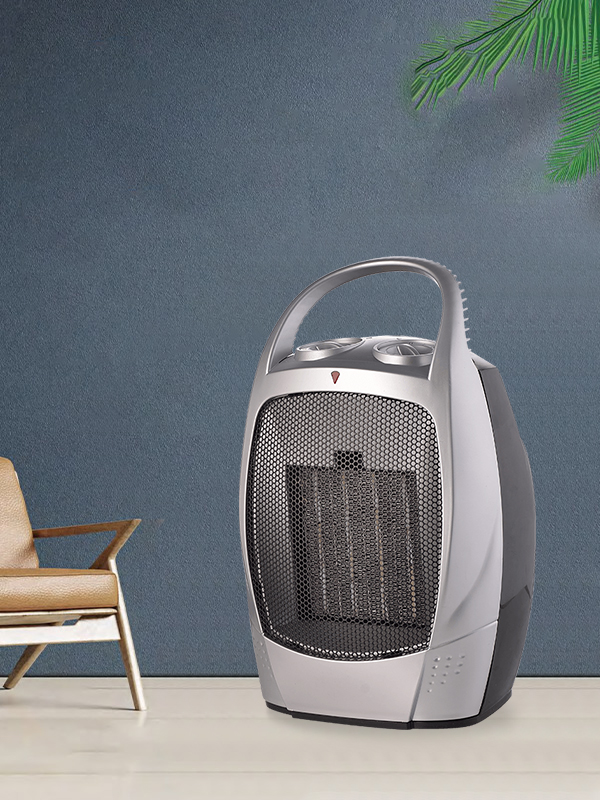 HPC-D1501/D1501L 750/1500W Portable Adjustable Space HeaterThis dual-wattage portable heater illustrates the power-management theme of the surrounding text, running on 6.25 or 12.5 amps with an adjustable thermostat and automatic temperature control for steadier loads.View Product →
For whole-room heating, wall-mounted PTC units in the 1000/2000-watt class are intended for fixed installation, where the circuit can be planned around the load in advance instead of discovered after a tripped breaker.
 BPT-2000B Wall Mounted PTC Ceramic Heater 1000W/2000WA fixed-installation PTC unit in the 1000/2000-watt class, with wall-mount kit, overheating protection and child lock, matching the article's point about planning whole-room circuits around the load.View Product →
Bathrooms deserve particular care, because their circuits often feed hair dryers and other high-draw appliances. A wall-mounted bathroom heater rated 1000–2000 watts keeps the heating element up on the wall, away from water and from the outlet the hair dryer would otherwise compete for.
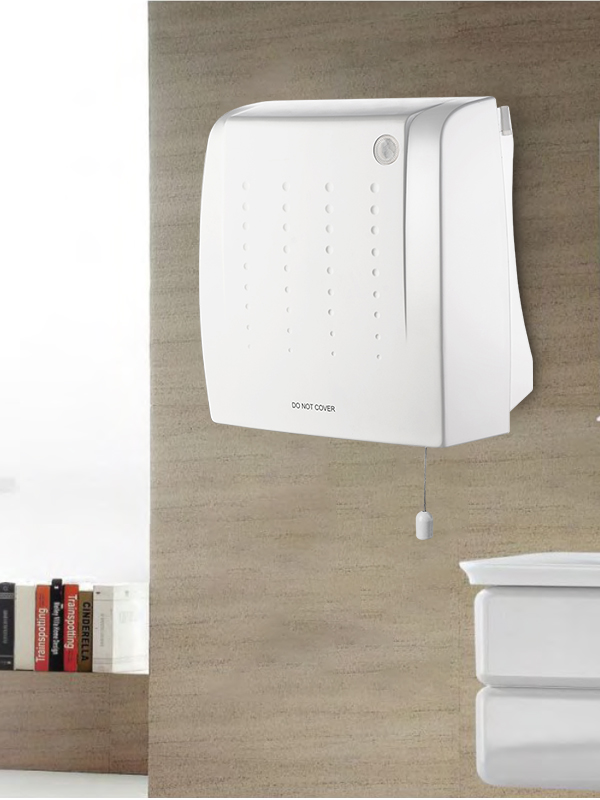 HBH-2004B 1000/2000W Wall Mounted Bathroom Fan HeaterWith an IP23 waterproof rating, overheat protector and pull-chain control, this wall-mounted bathroom heater keeps the element away from water, sucing the circuit-crowded bathrooms described in the text.View Product →
A five-minute check prevents most overload problems:
The short version: expect a plug-in heater to draw between roughly 4 and 15 amps, with the common 1,500-watt class pulling 12.5 amps at 120 volts and about 6.5 amps at 230 volts. The rating label supplies the wattage, your supply fixes the voltage, and one division gives you the amps. Match that figure against your circuit's continuous-load capacity and the heater you choose will do its job quietly instead of tripping breakers in midwinter. Once you know the amperage, estimating running cost is just as straightforward — this breakdown of what a 1,500-watt heater costs to run works through the numbers hour by hour.
Tower Heaters and Electricity Use: Do They Cost a Lot to Run in Reality?
2026-08-26How Many Sq Ft Will a 1500 Watt Heater Heat? A Complete Room Sizing Guide
2026-09-09Your email address will not be published. Required fields are marked *
Copyright © Cixi BEILIGE Electric appliance Co.,Ltd. All Rights Reserved