News
We are a professional heater supplier.
Content
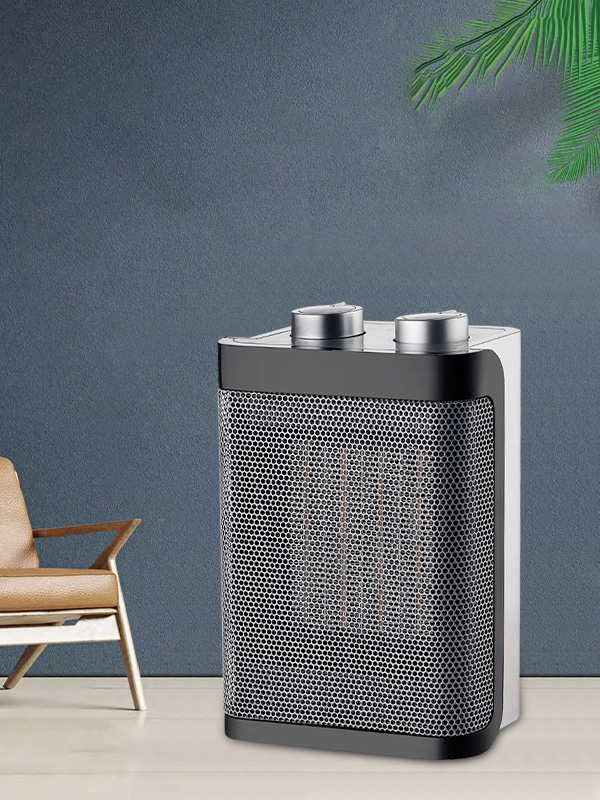
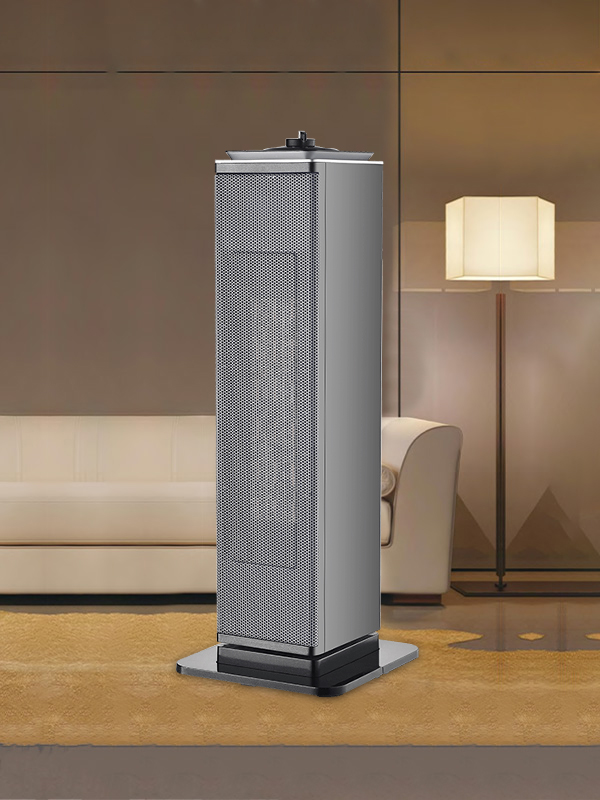
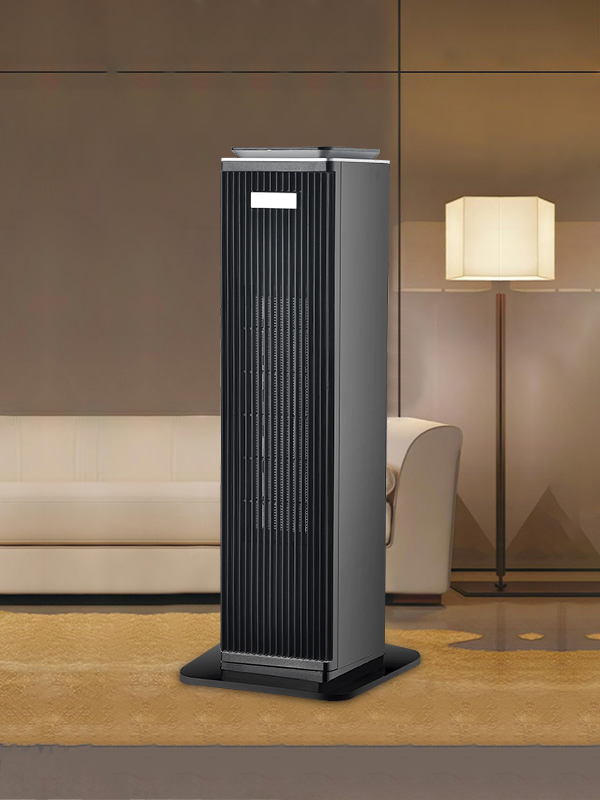
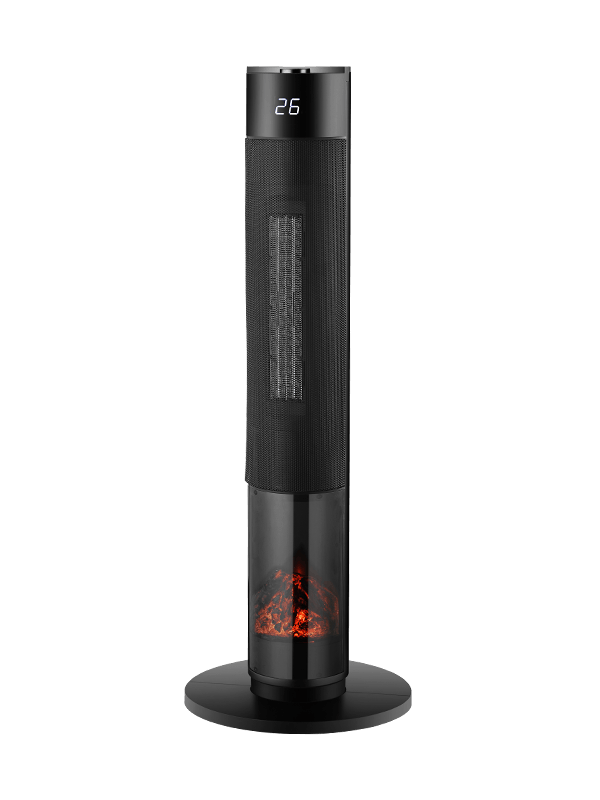
A ceramic heater works by passing electrical current through a PTC (Positive Temperature Coefficient) ceramic element, usually made from barium titanate, which converts that current directly into heat through resistive (Joule) heating. The defining trait of a ceramic heater is that it regulates its own temperature without any external sensor or control circuit — as the ceramic gets hotter, its electrical resistance rises sharply once it crosses a specific point called the Curie temperature, which automatically throttles the current flowing through it. Less current means less heat, so the element settles into a stable operating temperature on its own. This is exactly why ceramic heaters are marketed as Constant Temperature Heaters: the constant-temperature behavior isn't a separate feature bolted on — it's a direct physical consequence of the ceramic material itself.
The rest of this article breaks down the physics behind that self-regulation, the two common ceramic heater designs, and where constant temperature ceramic heating is used in real products — from portable space heaters to industrial process equipment.
Most heaters — the metal coil in an old-fashioned space heater, for example — have a fixed resistance. Feed them more current and they simply get hotter and hotter until something else (a thermostat, a fuse, a person unplugging it) intervenes. PTC ceramic material behaves in the opposite direction, and that difference is the whole story.
PTC ceramic elements are typically made from barium titanate doped with rare earth elements, then compressed and sintered at high temperature into discs or squares with electrodes attached to each face. This sintering process forms a polycrystalline structure at the grain level, which is what gives the finished ceramic its self-regulating electrical behavior rather than a fixed, linear resistance.
When power is first applied, the ceramic is cold and its resistance is low, so current flows freely and the element heats up quickly — this is why ceramic heaters feel warm almost immediately after switching on. As the ceramic's temperature climbs and crosses its Curie point, it undergoes a phase transition and its electrical resistance jumps by several orders of magnitude in a very narrow temperature band. That sudden resistance spike chokes off the current, which reduces the power the element dissipates as heat, which in turn stops the temperature from climbing further.
The element settles at the point where the heat it generates exactly equals the heat it's losing to the surrounding air — a self-sustaining balance that requires no sensor, no microcontroller, and no thermostat to maintain. If airflow around the heater drops (a blocked vent, for instance) or the surrounding temperature rises, the element automatically reduces its own output rather than continuing to climb, which is the core safety advantage over wire-based heating elements.
Once you understand the PTC element itself, the remaining design question is how heat gets from that ceramic element out into the room or process. There are two dominant configurations, and the choice between them depends mostly on the application's airflow and space constraints.
In a fin design, the PTC ceramic block is combined with conductive aluminum fins. Current heats the ceramic, and the ceramic transfers that heat into the fins, which then release it into the air through natural convection or a fan pushing air across the fin surface. The large surface area of the fins spreads heat evenly and helps the whole assembly avoid hotspots, making this the more common layout for whole-room space heaters, workshop heaters, and offices where fast, even air heating matters.
Honeycomb designs use small PTC ceramic discs arranged with hundreds of tiny apertures running through the assembly, which air is forced through directly rather than across a fin surface. This geometry maximizes the surface area in contact with moving air, so honeycomb assemblies tend to produce more heat output per unit of size than fin designs. Standard three-disc honeycomb assemblies produce around 1,100 watts, four-disc versions around 1,500 watts, and five-disc versions up to 2,000 watts — output levels that can run as much as 50% higher than a similarly sized conventional coil or fin ceramic heater, which is why honeycomb assemblies show up frequently in compact, high-output applications like hair dryers, small appliance heaters, and automotive cabin heating.
| Design | Heat Transfer Method | Typical Output | Best Suited For |
|---|---|---|---|
| Fin (convective) | Aluminum fins, natural or forced convection | Varies with fin size | Whole-room space heaters, offices, workshops |
| Honeycomb | Air forced directly through disc apertures | 1,100 – 2,000 W | Compact, high-output, portable applications |
Separate from the fin-versus-honeycomb question is a second design choice: whether the heater warms the air first (convective) or warms objects and people directly (radiative). This distinction matters more for choosing the right product than most buyers realize.
Neither approach is universally better — convective models suit enclosed rooms where even air temperature matters, while radiative models suit open or drafty spaces (garages, patios, workshops) where heating the air itself would be wasted energy.
The term constant temperature heater gets used in two related but distinct senses, and it's worth separating them clearly, since they imply different levels of precision.
This is the behavior described above: a PTC ceramic element manufactured to a specific Curie point will naturally settle at roughly that operating temperature, with no active control loop required. This is sufficient for consumer and general-purpose applications — space heaters, seat warmers, hair dryers, automotive cabin heaters — where "constant" means the unit won't overheat or run away, not that it holds a precise setpoint to a fraction of a degree.
Industrial, laboratory, and medical applications often need tighter tolerances than passive PTC self-regulation alone can guarantee. These systems pair a ceramic or resistive heating element with digital temperature sensors and a PID (proportional-integral-derivative) control algorithm that continuously compares actual temperature against a setpoint and adjusts power accordingly. High-precision constant temperature control systems of this kind have demonstrated accuracy as tight as ±0.2°C in industrial microenvironment testing — a level of control that goes well beyond what the ceramic material's physics alone provides, and is necessary for applications like pharmaceutical processing, semiconductor manufacturing, and materials testing where even small temperature drift affects product quality.
Because PTC ceramic elements are compact, safe, and require no external control circuitry to avoid overheating, they show up across a wide span of industries — from everyday household products to safety-critical equipment.
Safety is the most frequently cited reason for choosing ceramic over traditional wire-coil heating elements, and the reasoning traces directly back to the self-limiting physics already covered.
One practical caution follows directly from this design: airflow around a PTC ceramic heater should never be blocked, for example by draping a towel over the unit. Restricting airflow doesn't create an immediate fire risk the way it would with a coil heater, but it can trip the unit's internal safety limits or cause uneven wear on the ceramic element over repeated cycles, so manufacturers consistently recommend keeping the intake and outlet clear during operation.
Your email address will not be published. Required fields are marked *
Copyright © Cixi BEILIGE Electric appliance Co.,Ltd. All Rights Reserved