News
We are a professional heater supplier.
Content
Quick answer: an air circulator moves air throughout an entire room by creating a continuous, churning airflow pattern, while a traditional fan pushes a direct, concentrated stream of air toward whatever is in front of it. Choose an air circulator if you want even temperature distribution across a whole room, better efficiency alongside an AC unit or heater, or a quieter continuous-use device — choose a traditional fan if you want an immediate, direct breeze on your skin for personal cooling. Neither one is strictly "better"; they solve different airflow problems, and many households benefit from having one of each rather than treating them as interchangeable.
Air circulators and traditional fans look similar enough at a glance — both have blades, both spin, both move air — that shoppers often assume the difference is just branding or price. It isn't. The two devices are built around different aerodynamic goals, and picking the wrong one for your space means either wasting money on a feature you won't use or ending up with a fan that never actually solves the discomfort you bought it for.
A traditional pedestal or box fan is designed for direct, localized airflow — the blades push air in a straight path toward a person or a specific spot in the room. This creates a direct breeze that speeds up sweat evaporation on the skin, producing an immediate cooling sensation, but it only affects the air in its direct path and does little for the rest of the room.
An air circulating fan works differently. Rather than simply blowing air in one direction, it's engineered to move and churn the entire volume of air within a room, functioning more like a whole-room climate tool than a spot cooler. This continuous circulation pattern is what allows an air circulator to distribute cool or warm air evenly to every corner of a space rather than just the area directly in front of it.
Warm air naturally rises and collects near the ceiling while cooler air sinks, a pattern known as thermal stratification. A traditional fan only stirs the air directly in its path and has little meaningful effect on this layering. An air circulating fan, by contrast, is built to churn the room's full air volume and break up that stratification, working toward a more even temperature throughout the space.
This is also why air circulators are commonly recommended alongside heating systems in colder months, not just for summer cooling. By actively circulating the warm air that naturally collects near the ceiling back down into the living space, a circulator can help a room feel warmer without raising the thermostat — effectively making a heater work more efficiently and potentially reducing heating costs. A traditional fan, built only for direct spot airflow, doesn't offer this same benefit; pointing a box fan at the ceiling does little to correct room-wide stratification.
"Circulating fan" covers several distinct product formats, and matching the type to the room matters as much as choosing circulator-versus-traditional in the first place.
| Type | Best For | Key Consideration |
|---|---|---|
| Oscillating circulating fan | Larger rooms, offices, open living spaces | Wider side-to-side sweep distributes air over a bigger area than a fixed-direction unit |
| Pedestal air circulator | Rooms needing adjustable height and reach | Look for a stated airflow reach and CFM rating if covering a large or open-plan space |
| Compact/desk circulating fan | Small rooms, nurseries, desks, bedside use | Quiet low-speed operation matters more here than maximum airflow volume |
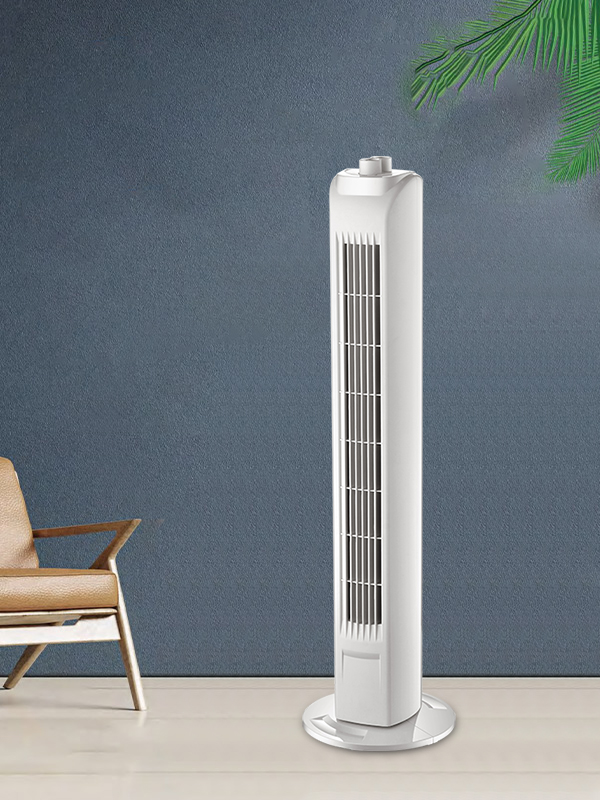
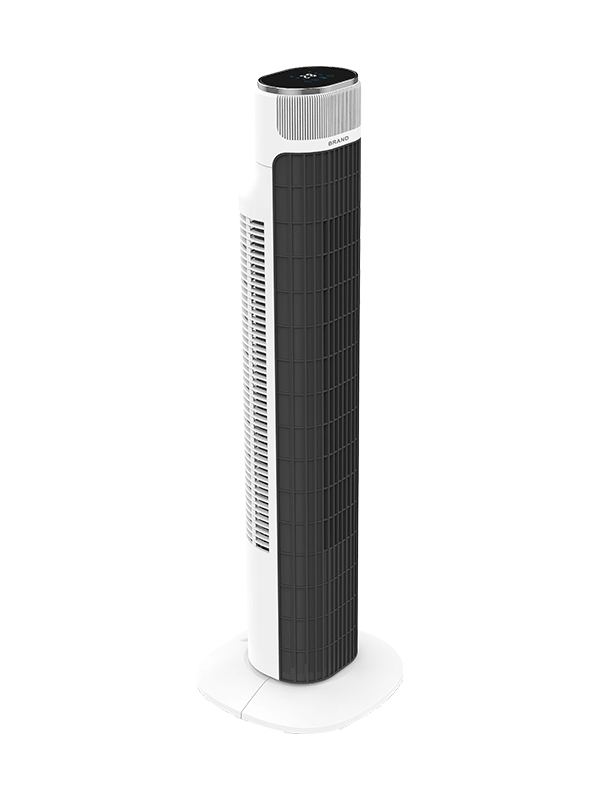
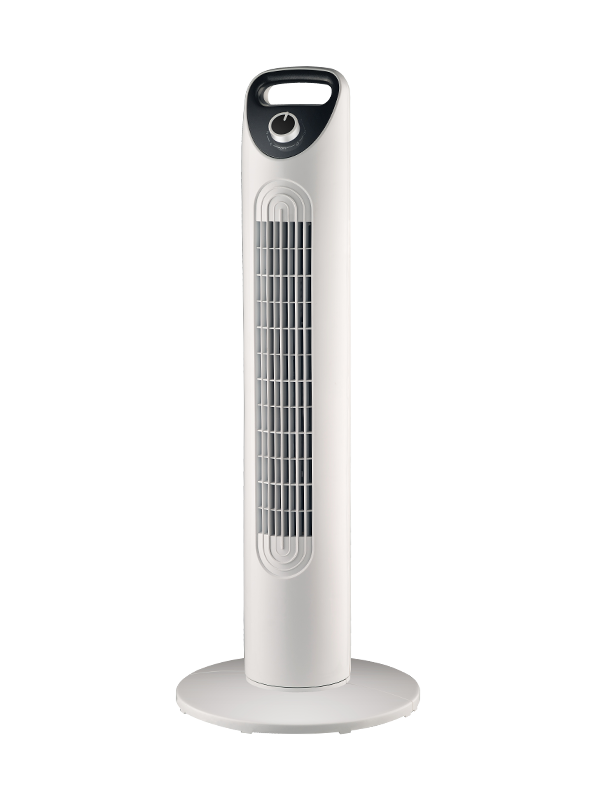
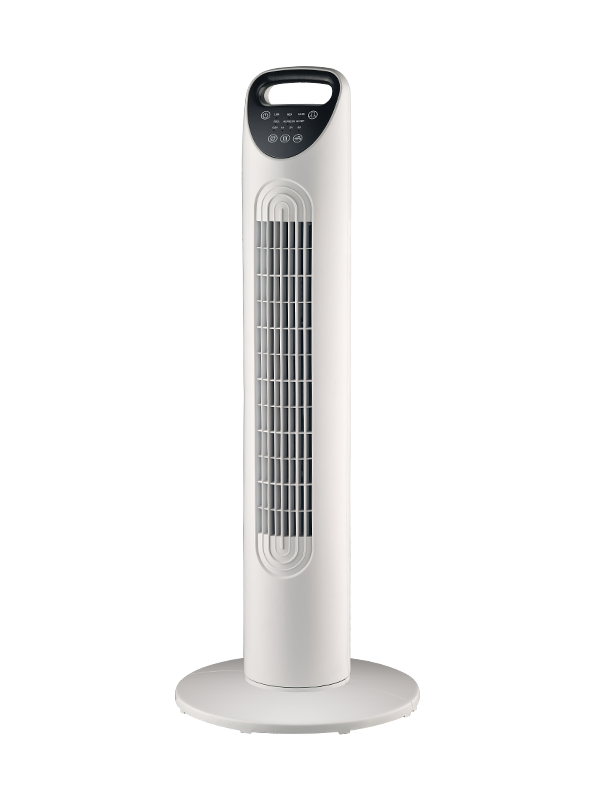
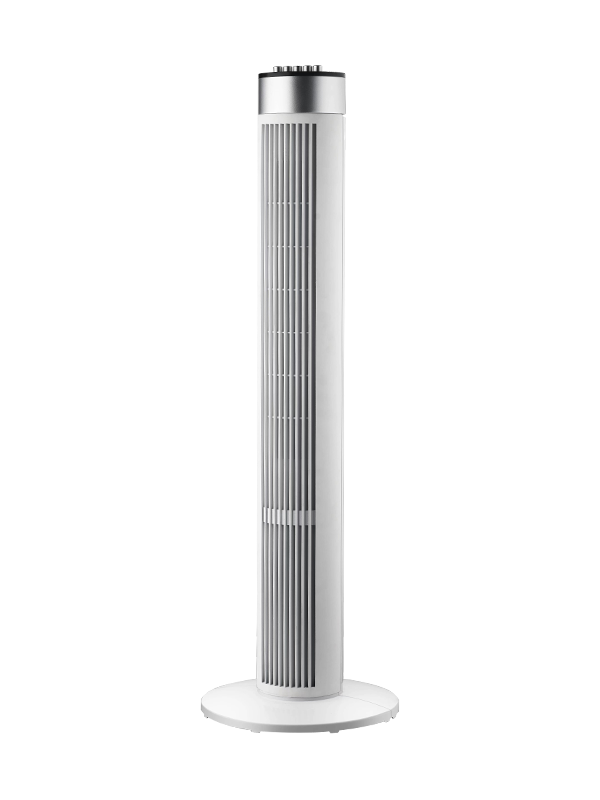
| Tower or floor circulator | Narrow spaces, minimal footprint needs | Generally trades some raw airflow volume for a smaller physical footprint |
Many circulating fan models come with a wider oscillation range than standard fans, allowing them to sweep side to side and spread air across a larger portion of the room rather than a single fixed direction. For an open floor plan or larger bedroom, a wide oscillation angle typically matters more to overall comfort than top-speed airflow alone.
Many modern air circulators use direct current (DC) brushless motors rather than the standard alternating current (AC) motors found in most traditional fans. DC motors tend to be more energy-efficient, offer a wider range of speed settings, and run more quietly, with the efficiency advantage being especially noticeable at low, continuous-circulation speeds. Some circulator models report meaningfully lower power draw than a comparable traditional fan at similar output, though the exact figure varies by model and is worth checking against the specific product's spec sheet rather than assuming a universal number.
If you're pairing a circulator with an air conditioner, placement matters more than raw power. Positioning the circulator to pull cool air from near the AC unit and redirect it across the room typically improves even cooling more than simply running the circulator at maximum speed.
Air circulators are often noticeably quieter than traditional fans at comparable settings, largely due to blade and motor design built for efficient continuous circulation rather than raw direct thrust. This makes a real difference for bedrooms, nurseries, or any space where the fan will run for extended periods, including overnight.
That said, airflow volume and noise are related. High-output air circulators moving a very large volume of air, often measured in CFM (cubic feet per minute), can become louder at their highest speed settings, even though they tend to stay quieter than a comparable traditional fan at low and mid speeds. When comparing models, checking the noise rating specifically at the speed you expect to actually use day-to-day is more useful than comparing only the maximum-speed spec.
Rather than treating this as a single either/or decision, match the device to the specific comfort problem you're trying to solve.
An air circulator and a traditional fan operate on fundamentally different aerodynamic principles rather than one simply being a stronger version of the other. A traditional fan remains the right tool for immediate, direct personal cooling in a small area, while an air circulating fan is the better choice for whole-room comfort, efficiency alongside AC or heating systems, and quieter continuous operation. Matching the device — and the specific type, whether oscillating, pedestal, or compact — to the room size and actual use case matters more than assuming either option is a universal upgrade over the other.
Your email address will not be published. Required fields are marked *
Copyright © Cixi BEILIGE Electric appliance Co.,Ltd. All Rights Reserved