 en
 English
 中文简体
 Español
 عربى
 русский

News
Home / News / Industry News / How Many Watts to Heat a Room? A Practical Guide by Room Size & Climate
We are a professional heater supplier.
Content
If you have ever asked, "how many watts to heat a room?" you already know the internet is full of conflicting advice. After more than three decades of designing electric heaters, we have found a few simple starting points that work for almost every home. This guide walks you through the numbers, the variables, and the practical choices that will help you match a heater to your room without wasting energy.
The fastest way to answer "how many watts to heat a room" is to use the 10-watts-per-square-foot rule. For a room with an 8-foot ceiling and average insulation, you need approximately 10W for every square foot of floor area. A 100 sq ft bedroom therefore needs around 1,000W, while a 200 sq ft living room needs roughly 2,000W.
For rooms with higher ceilings, add about 10% more wattage for each extra foot of height. For drafty or poorly insulated rooms, add 20% to 30% to your base number. These adjustments are rough, but they give you a realistic range before you start comparing heaters.
| Room area (sq ft) | Room area (sq m) | Approximate watts |
|---|---|---|
| 75 | 7 | 750W |
| 100 | 9 | 1,000W |
| 120 | 11 | 1,200W |
| 150 | 14 | 1,500W |
| 200 | 18.5 | 2,000W |
| 300 | 28 | 3,000W or two heaters |
Notice that the wattage matches common heater ratings. This is not a coincidence. Most electric heaters offer 750W, 1,000W, 1,500W, or 2,000W power levels because these suit normal room sizes well.
The 10W-per-square-foot guideline works well for a standard room, but no two rooms are exactly the same. Here are the variables we consider when helping customers choose a heater:
As a rough rule, if you are between two sizes, choose the higher wattage and run the heater on its lower setting when the room is warm enough. That gives you flexibility without overspending on energy.
Living rooms are usually the most used space in the home, so you want a heater that can maintain a comfortable temperature for several hours. For a typical 150 to 200 sq ft living room, 1,500W is the practical starting point. If the room is open-plan, has large windows, or has a high ceiling, a 2,000W model gives you more headroom.
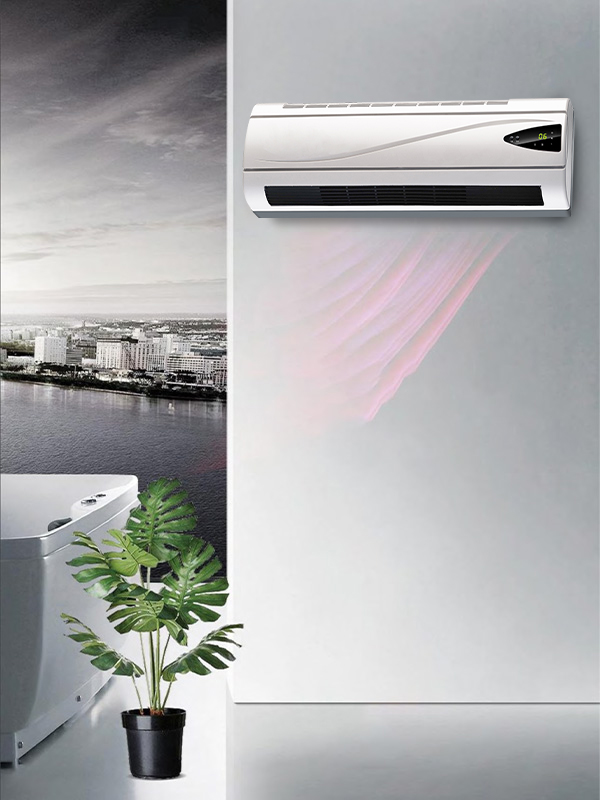 Smart Wall-Mounted PTC Heater with Remote and TimerThis wall-mounted unit offers 1,000W or 2,000W settings and smart controls, ideal for quickly warming living rooms while keeping the floor clear.View Product →
Wall-mounted heaters are a good choice in living rooms because they keep the floor clear. Our wall-mounted PTC heaters can be set to 1,000W or 2,000W, so you can warm the room quickly and then reduce the output to hold a steady temperature.
For smaller rooms such as bedrooms and home offices, a portable heater is often more practical. A 750W setting is enough for a compact desk area or a single bedroom, while 1,500W handles a 120 to 150 sq ft room with ease. Because these rooms are usually occupied for shorter periods, you do not need the same continuous output as a living room.
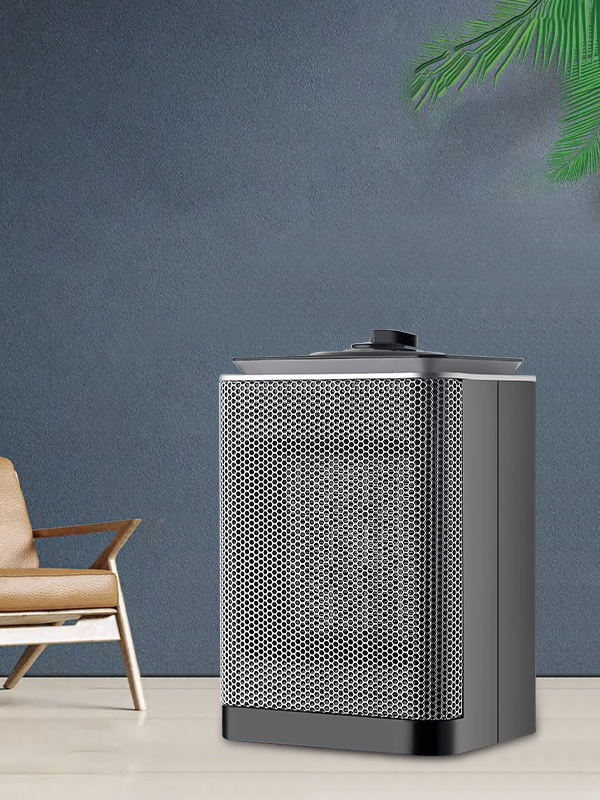 Portable Oscillating PTC Heater with ThermostatWith 750W/1,500W settings, adjustable thermostat, and oscillation, this portable heater suits bedrooms and offices while distributing warmth evenly.View Product →
Look for a portable PTC heater with adjustable thermostat and oscillation. The thermostat keeps the temperature steady, and oscillation spreads the warm air across a wider area instead of leaving one corner warm and the rest cool.
Bathrooms are smaller, but they need a different kind of heating. A small bathroom of around 40 to 60 sq ft may need 1,000W to warm up quickly, while a larger bathroom benefits from 2,000W. Moisture and splashes mean the heater must be suitable for the room, which is why many bathrooms use waterproof wall-mounted models with IP protection.
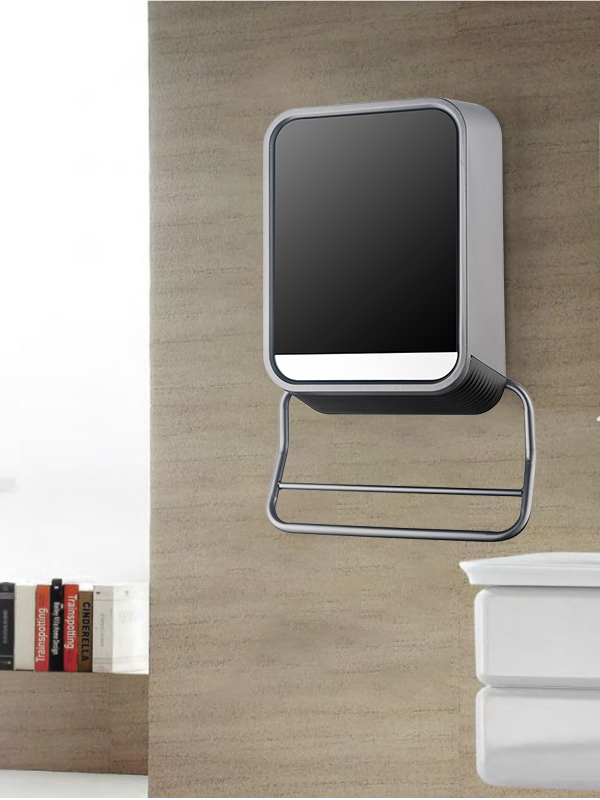 Waterproof Bathroom Heater with Towel RackFeaturing IP23 protection, 1,000W/2,000W power, and an integrated towel rack, this wall-mounted model warms bathrooms fast and adds drying convenience.View Product →
If towel warming is also part of your morning routine, a heater with an integrated towel rack can do double duty. The key is to choose a wattage that raises the temperature quickly so the heater does not have to run non-stop.
Matching the heater size to the room is the first step, but how the heater runs matters too. A heater that is too small will run longer and may still leave the space chilly. A heater that is too large may short-cycle, turning on and off more often. Both situations waste energy. Multiple power settings, thermostats, timers, and eco modes help the heater run only as hard as needed.
If you are curious about running costs, we have an article that explains how much electricity a fan heater uses. It breaks down the cost of 1,000W, 1,500W, and 2,000W units in everyday terms.
Once you have an idea of the wattage, you can compare models side by side in our electric heater range. We build most of our heaters with two or more power levels, so you can choose the setting that fits the moment and the room.
So, what is the short answer to "how many watts to heat a room"? In standard conditions, start with 10W per square foot. A 1,500W heater is enough for roughly 150 sq ft, and a 2,000W heater covers about 200 sq ft. Then adjust for ceiling height, insulation, windows, climate, and room use.
You do not need a perfectly precise calculation before buying a heater. A sensible estimate, combined with a heater that offers multiple settings, will let you dial in comfort while keeping energy use under control. And if you are ever in doubt, choose a heater with a little more power than the base rule suggests and run it on the lower setting. That approach is simple, practical, and it works.
how many square feet will a 2000 watt heater: Practical Applications, Selection
2026-11-02how much does a 300 watt heater cost to run: Practical Applications, Selection
2026-11-09Your email address will not be published. Required fields are marked *
Copyright © Cixi BEILIGE Electric appliance Co.,Ltd. All Rights Reserved