 en
 English
 中文简体
 Español
 عربى
 русский

News
Home / News / Industry News / How Much Does a 400W Heater Cost to Run? Real Numbers and a Simple Formula
We are a professional heater supplier.
Content
A 400-watt heater is one of the smallest plug-in heaters you can buy, and that is exactly why so many people ask what it costs to run. Here is the short answer: at the average US residential electricity rate of about 17 cents per kilowatt-hour, a 400W heater running at full output costs roughly 7 cents an hour. Leave it on for eight hours a day and you are looking at about 54 cents a day, or a little over $16 a month.
That is a genuinely modest number. A 1,500-watt space heater at the same rate costs around 26 cents an hour, almost four times as much. But no two households pay the same, because the final figure depends on your local tariff, how long the heater actually runs, and how often its thermostat lets it rest. Let us walk through the math together, then look at the details that quietly move the bill up or down.
Every electric heater, whether ceramic, fan-forced, oil-filled or panel, turns electricity into heat at the same theoretical rate. One kilowatt-hour of electricity produces one kilowatt-hour of heat, no matter what the box says. So the calculation is refreshingly short:
Cost per hour = (wattage ÷ 1,000) × your electricity rate.
For a 400-watt heater that becomes 0.4 kWh per hour. Multiply 0.4 by whatever you pay per unit and you have your hourly cost. The table below runs that math at four common rate levels and two typical usage patterns.
| Electricity rate | Cost per hour | 4 hours a day (monthly) | 8 hours a day (monthly) |
|---|---|---|---|
| $0.10 per kWh | $0.04 | $4.80 | $9.60 |
| $0.17 per kWh | $0.07 | $8.16 | $16.32 |
| $0.25 per kWh | $0.10 | $12.00 | $24.00 |
| $0.35 per kWh | $0.14 | $16.80 | $33.60 |
Notice how the numbers stay small even at the higher rates. A 400W heater is not the appliance that breaks a household budget; the big jumps usually come from higher-wattage units running for long stretches.
Numbers on a page are hard to feel. Here is what a 400W heater costs in ordinary situations, using 17 cents per kWh:
That last line is the one worth remembering. Even a small heater becomes a real expense if it never switches off, which is why thermostats, timers and eco modes matter far more than the wattage printed on the label.
Rates vary widely, from around 10 cents per kWh in some US states to 30 cents or more in parts of Europe and the UK. Check your last bill and divide the total by the kWh used to get your real number. A heater that costs 4 cents an hour in one country can cost 12 cents in another without changing a single thing about the appliance.
A 400W heater only draws 400 watts while the element is energised. Once the room reaches the set temperature, the thermostat cuts power and the heater idles. In a well-insulated small room that might mean the heater runs only 40 to 60 percent of the time, so an eight-hour session could use 2 kWh rather than 3.2. This is the single biggest reason real bills come in below calculator estimates.
A 400W heater is designed for spot heating: a desk, a bathroom, a small bedroom, a caravan. Put it in a large, draughty living room and it will run continuously without ever satisfying the thermostat, which is the most expensive way to use a small heater. Close the door, keep the space compact, and let the heater do the job it was built for.
PTC ceramic elements self-regulate as they warm up, holding a steadier output than basic coil heaters. That does not change the rated wattage, but it does make the delivered heat more consistent, which usually means fewer minutes of full-power running.
Around 400 watts is enough for a bathroom of 3 to 5 square metres, a home office, or a personal space beside a sofa. It is not a whole-room solution for winter in a cold climate, and expecting it to be is how people end up disappointed and leave the heater on all day.
Bathrooms are the classic case. A wall-mounted unit keeps the floor clear, sits above splash zones and warms the space quickly while you shower. Models with an adjustable thermostat, like our HBH2004C bathroom wall heater, let you set a target temperature instead of relying on a simple on/off switch, so the element stops working the moment the room feels comfortable.
 HBH2004C Wall-Mounted Bathroom Heater with Adjustable ThermostatA wall-mounted bathroom heater with adjustable thermostat and 1000W/2000W settings, suited to warming showers quickly while keeping floor space clear.View Product →
For desk-level warmth, a portable unit you can carry between rooms usually makes more sense than heating an empty space all evening.
A mechanical dial with numbered settings is not the same thing as a thermostat. Look for a model that senses room temperature and switches the element accordingly; the difference across a winter can be 20 to 30 percent of your heating energy.
Many heaters offer two power levels, commonly 750W and 1,500W. Running at the lower setting for longer is often cheaper and more comfortable than blasting at full power, and some designs let you step down to a gentle output that behaves much like a 400W unit in a small room.
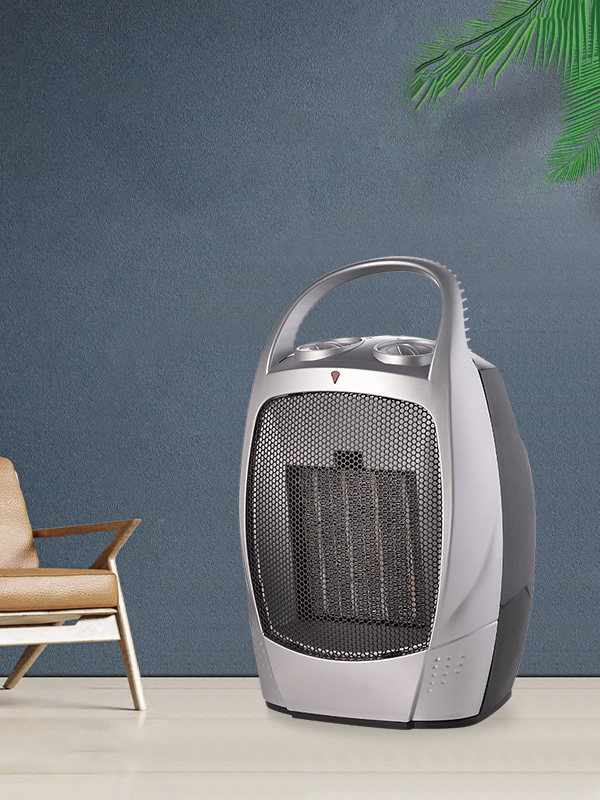 HPC-D1501/D1501L Portable PTC Space HeaterA portable 750W/1500W PTC indoor heater with adjustable thermostat and carry handle, useful for desk-level warmth and moving between rooms.View Product →
A timer stops you paying for heat in an empty room, and eco modes reduce output once the target temperature is close. Both are worth having on any heater that runs for hours at a time, and both show up clearly on your statement at the end of the month.
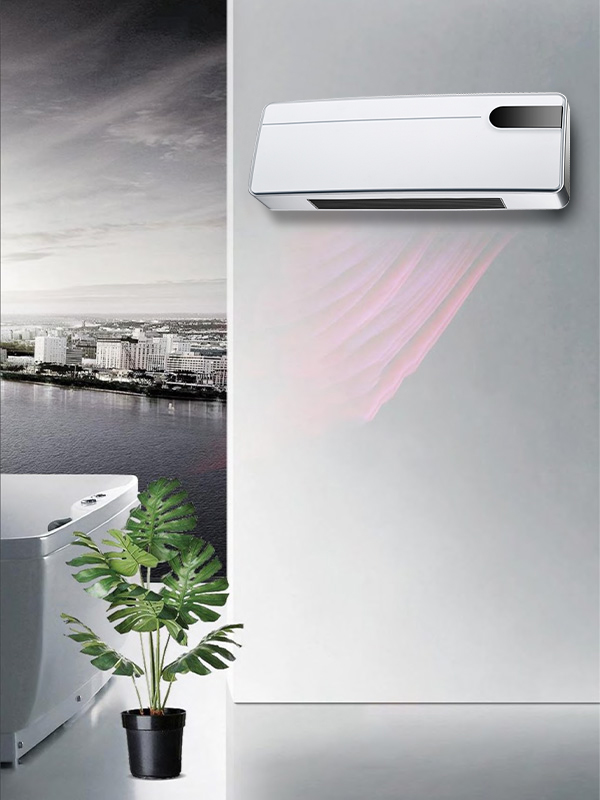 BPT-2000B 5005L-ERP Energy-Saver Wall Heater with TimerA wall-mounted 1000W/2000W PTC heater with weekly timer, remote control and eco features; oscillating louvres on the 5005BL-ERP variant aid even warmth.View Product →
A gently oscillating heater distributes warmth more evenly, so the thermostat sensor reads a truer room temperature and the element cycles off sooner. It is a small design detail with a real effect on comfort per kilowatt-hour.
If you are choosing between sizes, the comparison below uses 17 cents per kWh and shows where the cost curve steepens.
| Wattage | kWh per hour | Cost per hour | Cost per 8-hour day |
|---|---|---|---|
| 400W | 0.4 | $0.07 | $0.54 |
| 750W | 0.75 | $0.13 | $1.02 |
| 1000W | 1.0 | $0.17 | $1.36 |
| 1500W | 1.5 | $0.26 | $2.04 |
| 2000W | 2.0 | $0.34 | $2.72 |
The pattern is linear: double the wattage and you double the cost for the same running time. What is not linear is the warmth delivered per room. A 400W heater in a 4 square metre bathroom feels stronger than a 1,500W heater in an open-plan kitchen. Matching the heater to the space matters more than the number on the label. If you want to see how the figures scale up, our breakdown of running a 1,500-watt heater is a useful next read.
No. At typical rates it costs somewhere between 4 and 14 cents an hour, which makes it one of the cheapest plug-in heaters available. The cost only becomes significant if it runs continuously in a space it cannot heat.
It warms a small, enclosed space such as a bathroom, study or caravan quite comfortably. It will not heat a large living room in freezing weather, and no amount of running time will change that.
For one occupied room, often yes. Heating a whole house to warm a single home office is wasteful, and a small local heater does the job for a fraction of the energy. For a whole family in a whole house, central heating usually wins.
If you are specifying heaters for a range of rooms, or sourcing them for a retail programme, the honest starting point is matching wattage to space and then adding the controls that let the heater switch itself off. That is how we have approached heater design since 1981, and you can learn more about our factory and testing process if you want the details. Get the sizing right, and a 400-watt heater stays one of the least expensive ways to stay warm through the colder months.
Your email address will not be published. Required fields are marked *
Copyright © Cixi BEILIGE Electric appliance Co.,Ltd. All Rights Reserved