 en
 English
 中文简体
 Español
 عربى
 русский

News
Home / News / Industry News / how many watts to run a portable heater: Practical Applications, Selection, Performance
We are a professional heater supplier.
Content
Portable heaters are one of the few appliances where the label tells you almost everything. The wattage printed on the box is the heating capacity, the running cost and the electrical load all at once. So when someone asks how many watts it takes to run a portable heater, the honest answer is short: most household units pull between 750 and 1500 watts on full power, small personal heaters sit around 200 to 500 watts, and a smaller group of high-output models reach 2000 watts.
Everything else on the packaging is detail arranged around that number.
Here is the range most homes actually live in:
One fact worth holding onto: an electric resistance heater is close to 100 per cent efficient. Every watt it draws becomes heat inside the room. A 1500 W heater from one factory and a 1500 W heater from another deliver roughly the same warmth. What actually differs is how quickly the element reaches temperature, how evenly the fan spreads the air, and how intelligently the controls decide when to stop drawing power.
PTC ceramic elements and wire-wound coils both convert electricity to heat, but they behave differently. A PTC stone is self-regulating: its resistance climbs as it warms, so output settles at a stable point instead of running away. That is why PTC heaters are usually described with a range such as 750/1500 W rather than a single figure. Coil heaters are simpler and cheaper, and they tend to hold a fixed output until the thermostat cuts them.
The fan motor adds roughly 10 to 40 watts, and the control board a few more. On a 1500 W heater that overhead is small enough to ignore when you are sizing a circuit.
A two-stage heater genuinely halves its draw on low: 1500 W becomes 750 W. A thermostat works differently. It does not lower the wattage; it changes the duty cycle. A 1500 W heater cycling on for half of each hour averages about 750 Wh per hour, which is why thermostat control saves more money than simply turning a dial down.
The table below is a working reference for the formats most people are choosing between. Current figures assume a 120 V supply; on a 230 V circuit the same wattage draws roughly half the amperage.
| Heater type | Typical wattage | Current at 120 V | Where it fits |
|---|---|---|---|
| Personal / desktop heater | 200–500 W | 1.7–4.2 A | Desk, bedside, spot heating |
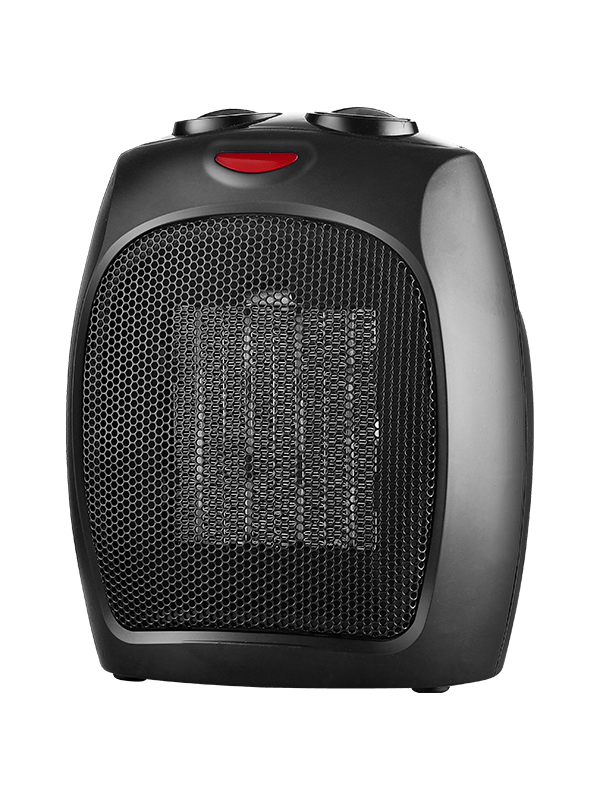
| Compact PTC fan heater | 750–1500 W | 6.3–12.5 A | Bedroom, study, small living room |
| Full-size fan heater | 1500 W | 12.5 A | Medium room, central heating top-up |
| High-output portable heater | 2000 W | 16.7 A | Large rooms on 230 V or a 20 A circuit |
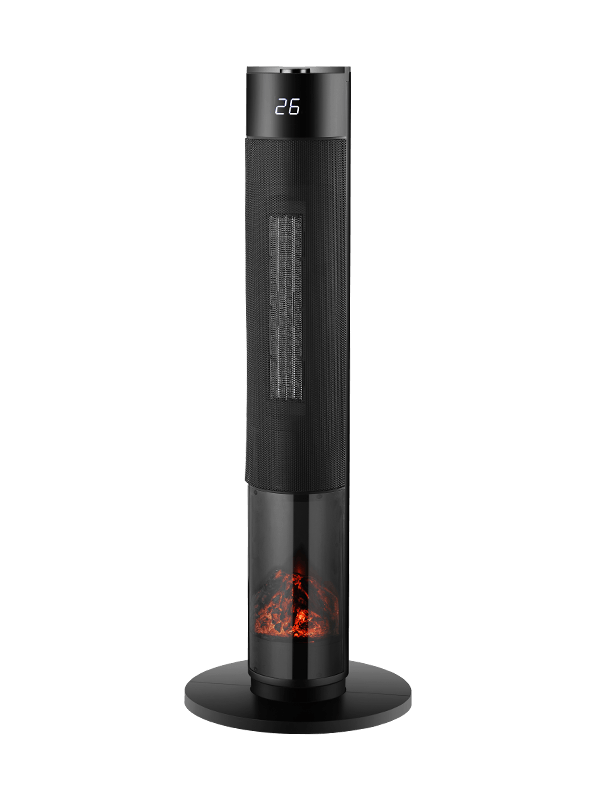
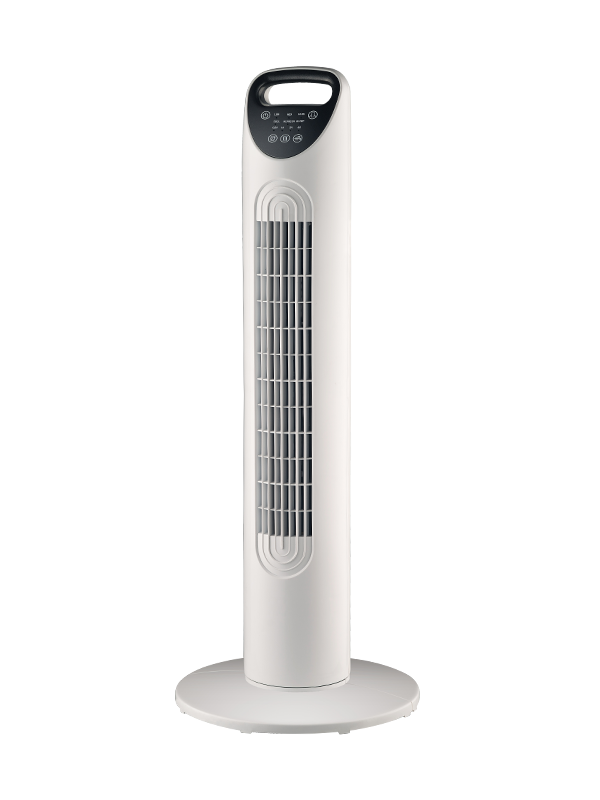
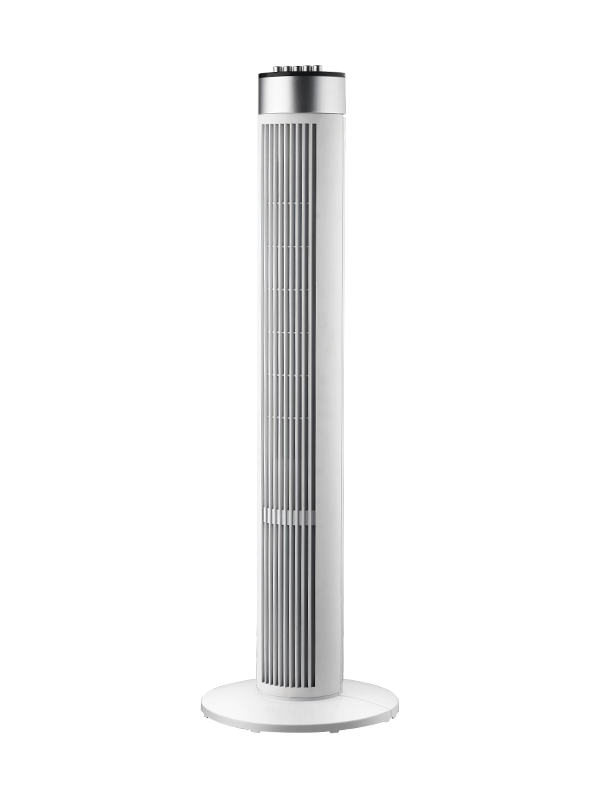
| Tower fan heater | 1500–2000 W | 12.5–16.7 A | Living room, long runtimes |
| Bathroom wall-mounted heater | 1000–2000 W | 8.3–16.7 A | Bathrooms with a fixed, IP-rated install |
The arithmetic is simple enough to do on a phone: watts multiplied by hours, divided by 1000, gives kilowatt-hours. A 1500 W heater running flat out for four hours uses 6 kWh. At a rate of about 0.17 per kWh that is roughly one unit of currency per evening, and a 750 W average (because the thermostat kept cycling) would halve it.
Cost is therefore driven less by the headline wattage than by how long the element stays energised. That is the whole argument for thermostats, timers and eco modes. We walk through the numbers in more depth in our guide to how much electricity a fan heater uses.
In practice, the models that cost least to live with are the ones with an adjustable thermostat and an oscillating outlet, because they spread warm air across the room instead of baking one patch and letting the sensor switch off early.
This is where wattage stops being an abstraction. A standard North American branch circuit rated 15 A at 120 V tops out at 1800 W, and the usual safety guidance is to load a circuit to no more than 80 per cent continuously, which means 1440 W. Put plainly: a 1500 W heater on high already sits at the edge of a 15 A circuit. Plug a kettle, a hair dryer or a vacuum into the same circuit and the breaker will do its job.
A 20 A circuit gives you 2400 W, or 1920 W continuous, and comfortably carries a 1500 W heater alongside a lamp or a laptop. In 230 V markets the sums are kinder: 10 A at 230 V is 2300 W, and 16 A is 3680 W, which is why 2000 W heaters are ordinary there.
The other half of the problem is the extension cord. A 1500 W load needs at least 14 AWG conductors; the thin 18 AWG cords sold for lamps will warm up noticeably and should never feed a heater. Where possible, plug straight into the wall socket.
The rough industry rule of thumb is 100 W per square metre, or about 10 W per square foot, for a reasonably insulated room with standard ceiling height. That gives you a 1000 W heater for a 10 m² bedroom and a 2000 W unit for a 20 m² living room.
Treat it as a starting point, not a law. Single-glazed windows, concrete walls, open-plan layouts and very cold outdoor temperatures all push the requirement upward. So does the way the heater is used: a 1500 W unit that is correctly sized will cycle on and off and hold a comfortable temperature, while the same heater in a room that needs 2500 W will run continuously, never quite satisfy the thermostat, and cost more than the smaller unit would have.
Under-sizing is a more common mistake than over-sizing, and it is the more expensive one.
We have been building electric heaters in Cixi since 1981, and the wattage question has shaped our product platforms from the beginning. Most of our portable PTC heaters are built around 750/1500 W or 1000/2000 W two-stage designs, because those figures match the circuits people actually have. Around that core we add adjustable thermostats, 1 to 24 hour timers, LED and touch controls, oscillation, and the safety layer that matters more than any specification: tip-over cut-off and overheat protection.
Because we manufacture in-house, from injection moulding and metal stamping through to final assembly and testing, wattage is something we can tune per market rather than something we buy off a shelf. If you would like to see the plant and the people behind that, our about page has a full walkthrough.
 HPC-D1505YL Portable PTC Heater with Dual WattageWith 750W and 1500W settings, this PTC heater draws significant power at full output but offers timed, protected indoor heating.View Product →
Battery power stations and portable heaters are an awkward match, and the wattage figure explains why. A 1000 Wh power station feeding a 1500 W heater will run for well under an hour once inverter losses are counted, and many compact stations cap their output below what the heater needs.
Generators are more practical, but sizing matters. Allow 2000 to 3000 W of running capacity for a 1500 W heater, plus headroom for the surge when the element first energises, and never run a heater from a small camping inverter.
So the number to remember is 1500. It is the figure most portable heaters settle on, it is the practical ceiling for a standard household circuit in North America, and it is enough to hold a normal-sized bedroom or study at a comfortable temperature when the heater is matched to the space. Check the label, do the circuit sum before you plug in, and choose a unit whose controls let it cycle rather than run flat out. That is what turns a wattage rating into an actual heating bill.
how much does a 300 watt heater cost to run: Practical Applications, Selection
2026-11-093000W Heater Running Cost: Hourly, Daily and Monthly Math for Homeowners
2026-11-16Your email address will not be published. Required fields are marked *
Copyright © Cixi BEILIGE Electric appliance Co.,Ltd. All Rights Reserved