News
We are a professional heater supplier.
Content
Infrared and ceramic heaters work on fundamentally different principles, and that difference determines which one actually suits your situation. If you need instant, targeted warmth in an open or drafty space, infrared wins. If you need consistent, even room temperature with stable air warmth over time, a ceramic heater — particularly a constant temperature ceramic heater — is the better choice.
The confusion between these two heater types often leads buyers to purchase the wrong product for their actual heating need. A person who buys an infrared heater for a closed bedroom expecting gradual room warmth will be disappointed; someone who buys a ceramic fan heater for an open garage expecting quick personal warmth will be equally frustrated. The sections below break down every meaningful difference in practical terms.
The performance differences between infrared and ceramic heaters trace directly back to their heating mechanisms. Understanding these mechanisms makes every other comparison easier to interpret.
Infrared heaters emit electromagnetic radiation in the infrared spectrum — the same mechanism by which the sun warms your skin on a cold day. This radiation travels through the air without heating it and is absorbed directly by solid objects and people in its path. The air temperature in the room can remain low while a person sitting in front of an infrared heater feels genuinely warm.
Most residential infrared heaters operate at wavelengths between 2 and 10 micrometers (far infrared), which are safe for prolonged exposure and do not require line-of-sight heating elements that glow visibly red. Near-infrared heaters (shorter wavelength, glowing elements) heat faster but are generally used in industrial applications.
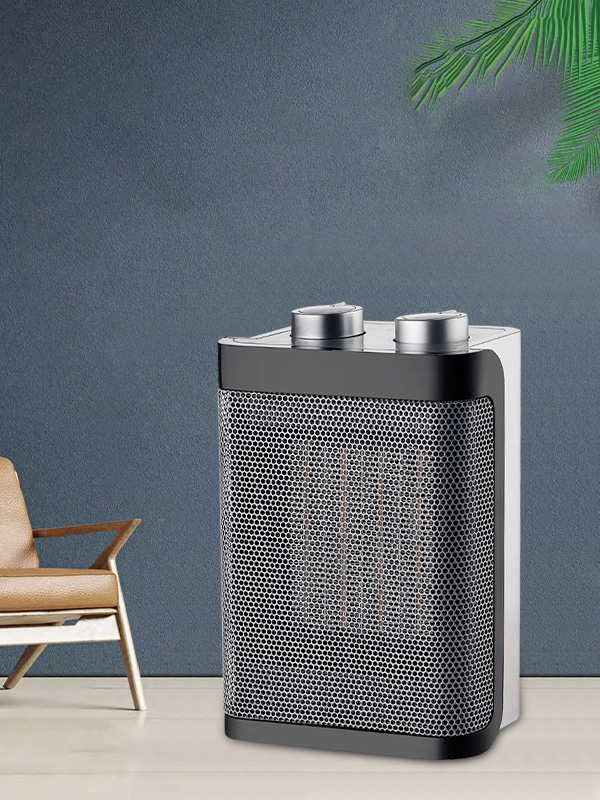
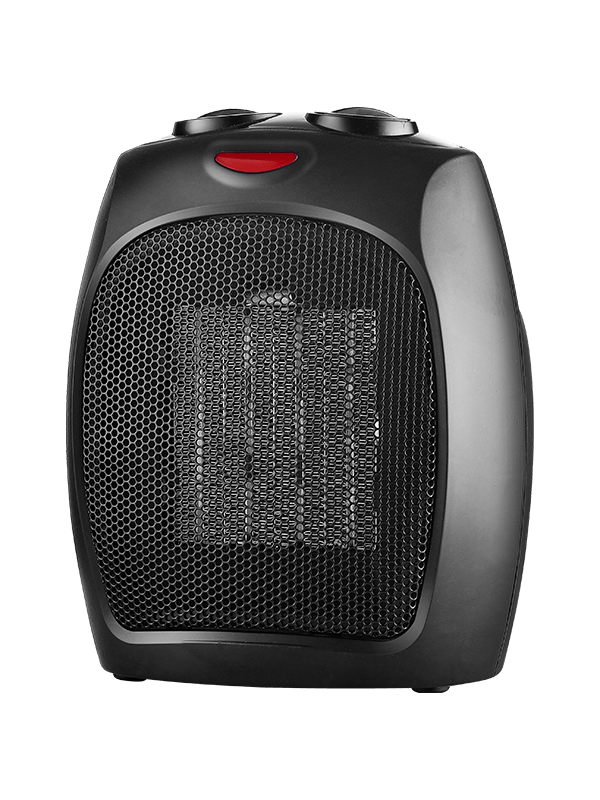
Ceramic heaters use a Positive Temperature Coefficient (PTC) ceramic heating element. Electrical current passes through the ceramic, which heats up rapidly. A fan (in most models) then blows air across the ceramic element, distributing warm air throughout the room via convection. The air itself is what carries the heat.
The PTC ceramic element has a critical built-in safety feature: its electrical resistance increases as temperature rises, which naturally limits how hot it can get. This self-regulating behavior is what makes modern ceramic heaters significantly safer than older wire-element space heaters and is the basis for constant temperature ceramic heater designs.
The table below summarizes the most important practical differences between the two heater types:
| Criteria | Infrared Heater | Ceramic Heater |
|---|---|---|
| Heat-up time | Instant (seconds) | 1–3 minutes to warm room |
| Heat delivery method | Radiant (direct to objects) | Convective (heats air) |
| Room temperature consistency | Low — depends on position | High — heats entire room evenly |
| Performance in drafts/open spaces | Excellent — unaffected by airflow | Poor — heated air disperses quickly |
| Air humidity effect | No drying effect | Reduces relative humidity slightly |
| Noise level | Silent | Low fan noise (20–45 dB typical) |
| Surface temperature | Can be hot to touch | Warm but rarely burning hot (PTC) |
| Energy efficiency | High for targeted heating | High for room heating with thermostat |
| Typical wattage | 300W – 1,500W | 750W – 1,500W |
| Best setting | Garages, patios, workshops, spot heating | Bedrooms, offices, enclosed living spaces |
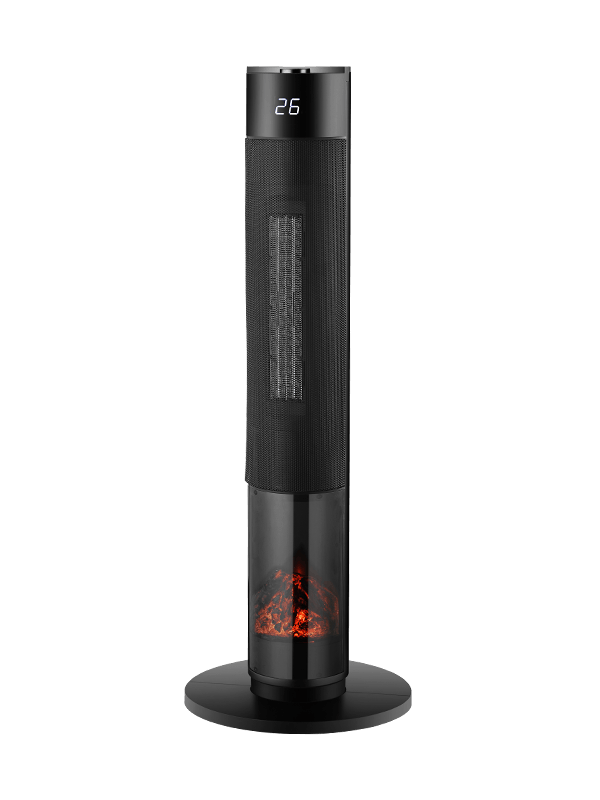
A standard ceramic heater runs at full power until manually switched off or a basic thermal cutoff trips. A constant temperature ceramic heater adds active thermostat control to the PTC element's inherent self-regulation, creating a heater that maintains a precise, user-set room temperature rather than simply blasting heat at full power continuously.
In practice, this means the heater monitors ambient temperature via a built-in sensor and modulates power output — or cycles on and off — to hold the room within a narrow temperature band, typically ±1–2°C of the set point. This has three meaningful real-world benefits:
Infrared heaters can also be paired with thermostats, but because they heat objects rather than air, the thermostat's air temperature sensor does not fully capture the perceived warmth in the room. Constant temperature control works more intuitively and accurately with convective ceramic heaters where air temperature is the primary variable being managed.
Both infrared and ceramic heaters convert electricity to heat at close to 100% efficiency — nearly all electrical energy becomes usable heat output. The efficiency difference is not in the conversion rate but in how well that heat is delivered to where it is actually needed.
In an open, poorly insulated, or high-ceiling space — a garage, a covered patio, a workshop with frequently opened doors — heating the air is largely pointless because it escapes immediately. An infrared heater delivering warmth directly to the person working in that space uses far less energy than a ceramic fan heater trying to raise the air temperature of an uninsulated garage in winter. A 600W infrared heater can provide effective personal warmth in conditions where a 1,500W ceramic fan heater fails entirely.
In an enclosed, reasonably insulated room where the goal is to bring the entire space to a comfortable temperature and hold it there, a constant temperature ceramic heater is more efficient. Infrared heaters in enclosed spaces still heat objects well, but they do not warm the ambient air effectively, meaning occupants feel cold if they move away from the heater's direct line. The ceramic heater warms the room uniformly, so the thermostat can reduce power once the set temperature is reached. Running at 50% duty cycle for 8 hours uses far less electricity than running at full power throughout.
Both heater types have good safety records when used correctly, but their risk profiles are different and matter depending on the setting and who is using them.
Rather than declaring one heater type universally better, the more useful question is which type fits your specific heating scenario. Here is how the two types map to common real-world situations:
Once you have identified which heater type fits your situation, these are the specification and feature decisions that separate a well-suited purchase from a disappointing one:
Electric Heater & Smart Heater Buying Guide: Matching Your Home or Office Heater to Room & Circuit
2026-07-29How Wall Heaters Work: Wall-Mounted PTC vs Fan Heater Technology Guide
2026-08-12Your email address will not be published. Required fields are marked *
Copyright © Cixi BEILIGE Electric appliance Co.,Ltd. All Rights Reserved