 en
en  English
 中文简体
中文简体 Español
 عربى
عربى русский
News
Home / News / Industry News / Types of Wall Heaters: A Practical Guide to Choosing the Right Wall-Mounted Heater
We are a professional heater supplier.
Content
Choosing the right wall heater starts with understanding that “wall heater” is not a single product. Some models circulate air quietly, others beam heat directly at you, and many use a fan to warm a room in minutes. The type you choose affects how fast the room heats up, how much noise you hear, whether the unit is safe in a bathroom, and how much power it uses. This guide compares the main types of wall heaters so you can match the heater to the room and the way you live. We focus on electric wall heaters because they are the most flexible for retrofitting and do not need gas venting.
Wall heaters are usually classified by how they transfer heat. Convection heaters warm air and let it rise slowly. Radiant and infrared heaters emit heat directly to people and objects. Fan-forced heaters blow air across a hot element, and hydronic heaters use heated liquid inside a sealed metal body. A growing number of compact wall heaters use PTC ceramic elements, which self-regulate temperature and reduce overheating risk. The table gives a quick overview.
| Heater Type | How It Heats | Best Suited For | Main Trade-off |
|---|---|---|---|
| Convection | Heats room air slowly and evenly | Bedrooms, living rooms, continuous background heat | Takes longer to warm up a cold room |
| Radiant / Infrared | Emits infrared energy directly to people and objects | Workshops, offices, small spaces | Heat is directional; may leave cool spots |
| Fan-Forced (PTC ceramic) | Fan pushes air over a ceramic heating element | Bathrooms, entryways, rooms needing quick heat | Slight fan noise; may need more regular dusting |
| Hydronic | Sealed liquid heated by an element radiates warmth | Long-duration heating in single rooms | Heavier and often more expensive |
If you are weighing gas options, gas wall heaters come in three common ventilation types: direct vent, natural vent, and vent-free. Direct-vent versions draw combustion air from outside and exhaust through a pipe; natural-vent units rely on a chimney; vent-free models release combustion gases into the room and need correct sizing. We keep the rest of this guide to electric wall heaters because they avoid combustion venting and are simpler to install in existing homes.
Convection wall heaters have no visible glow and no fan noise. They warm air with finned metal elements or a panel, and the heated air naturally rises and moves around the room. Because the process is silent, convection heaters are often chosen for bedrooms, nurseries, and reading corners. The warmth develops gradually, so they are best for spaces where you want a steady background temperature rather than an instant blast. They also require a little air space around them, and they can feel slow in a chilly, oversized living area. If quiet operation matters most, a convection panel is a dependable, low-maintenance choice.
Radiant and infrared wall heaters produce heat that travels directly from the unit to your skin and nearby objects. The sensation is almost immediate, which is useful in an office, workshop, or drafty corner where you need fast comfort without changing the entire room temperature. The clear trade-off is that radiant heat is directional. The area behind a sofa or at the far end of a large room may remain cool, and the heater only feels effective when you are in its line of sight. Infrared panels spread heat more softly than exposed-coil radiant heaters, so they can look like a comfortable part of a room instead of an industrial appliance.
Fan-forced wall heaters are the quickest way to warm a fixed wall area. A built-in fan pulls cool air through the unit, passes it over the heating element, and pushes a steady stream of warm air into the room. This active airflow distributes heat faster than natural convection and keeps the temperature more even from floor to ceiling. Many of the wall-mounted units sold by our factory use PTC ceramic elements, which naturally limit heat build-up and work well inside a compact wall housing. A good example is the 1000W-2000W wall-mounted PTC ceramic heater from the BPT series; it offers two power levels, can heat a standard bedroom quickly, and includes overheat protection. Because PTC ceramic elements self-regulate, they are a very stable choice for wall-mounted heaters.
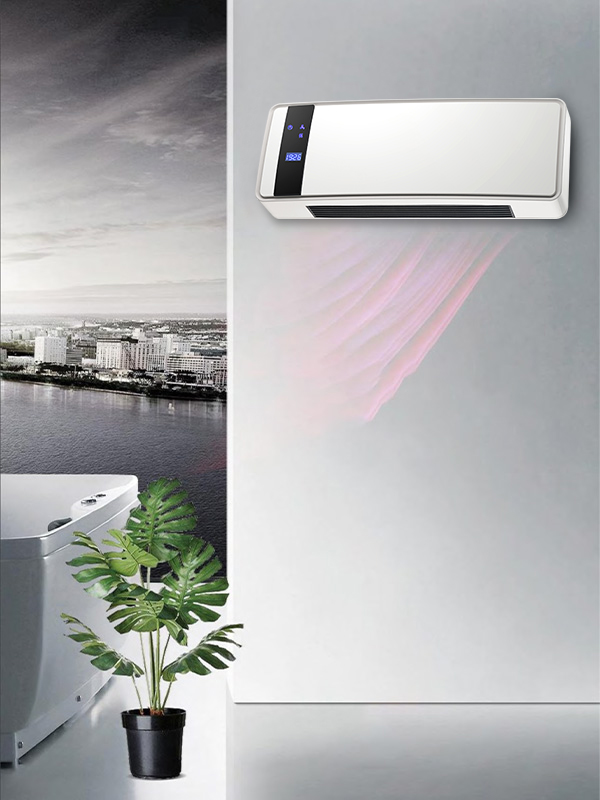 Wall Mounted Ceramic Heater Manufacturers, SuppliersCixi BEILIGE Electric Appliance Co., Ltd. is China Wall Mounted Ceramic Heater Manufacturers and Suppliers, offer Custom Wall Mounted PTC...View Product →
Bathroom installations require more than ordinary output. The heater must tolerate humidity and occasional splashes, so it should have an appropriate IP rating and a sealed enclosure. Wall-mounting saves floor space, and a dedicated bathroom fan heater is usually compact enough to fit above a door or beside a mirror. Some models add a towel rack, which is helpful in winter. A typical option is the waterproof bathroom heater with towel rack from the HBH series; it offers 1000W and 2000W settings, uses a glass front that is easy to wipe down, and can be mounted in a reasonably sized bathroom. Because bathrooms have lower thermal mass than living rooms, the fan-forced output reaches a comfortable level quickly, and the overheat cut-off adds peace of mind.
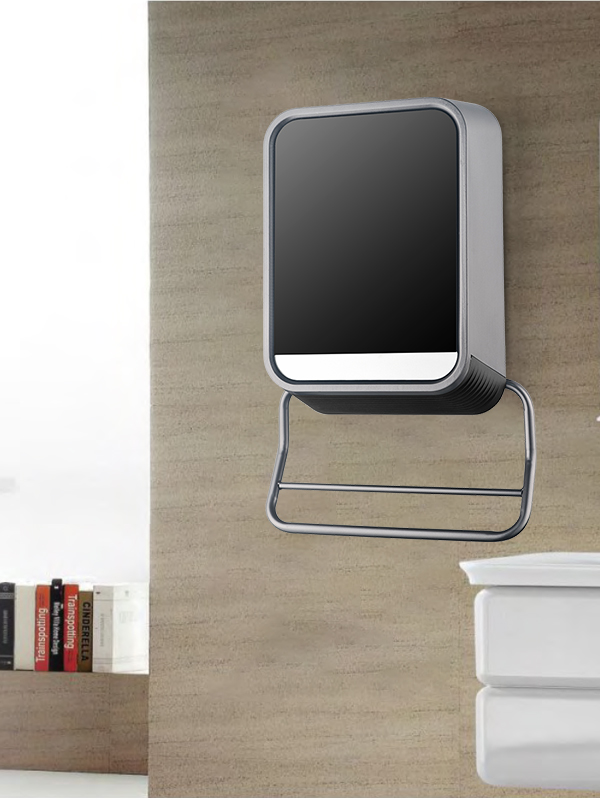 Custom HBH-2006B 1000W/2000W Glass Panel Waterproof Bathroom Heater with Towel RCixi BEILIGE Electric Appliance Co., Ltd is China HBH-2006B 1000W/2000W Glass Panel Waterproof Bathroom Heater with Towel Rack Suppliers ...View Product →
Hydronic wall heaters, also called liquid-filled or oil-filled wall panels, are a different subcategory among electric wall heaters. An element warms thermal fluid inside a sealed metal body, and the outer surface radiates heat to the room. These units warm up more slowly, but they continue to release stored heat for a while after the thermostat cycles off. That makes them a good fit for rooms occupied for many hours at a time, such as offices or children’s playrooms. On the downside, hydronic heaters are heavier and more expensive than simple convection models, and they need firm wall anchoring. They are not the first choice for rapid warm-ups, but they offer a very even, soft heat.
Fixed wall heaters often come with more control options than people expect. Look for models with a built-in thermostat, an adjustable timer, an eco mode, and sometimes remote control. These features reduce wasted energy by switching off when the room reaches temperature and by letting you avoid heating an empty room. A timer can warm the room before you wake up, while an eco mode automatically lowers power during standby cycles. If you want a clear way to monitor the temperature, a wall-mounted electric ceramic heater with LED display makes it easy to see the current setting and adjust it precisely. Another practical feature is an open-window detection mode, which senses sudden cold drafts and shifts to a lower output to avoid excessive heating.
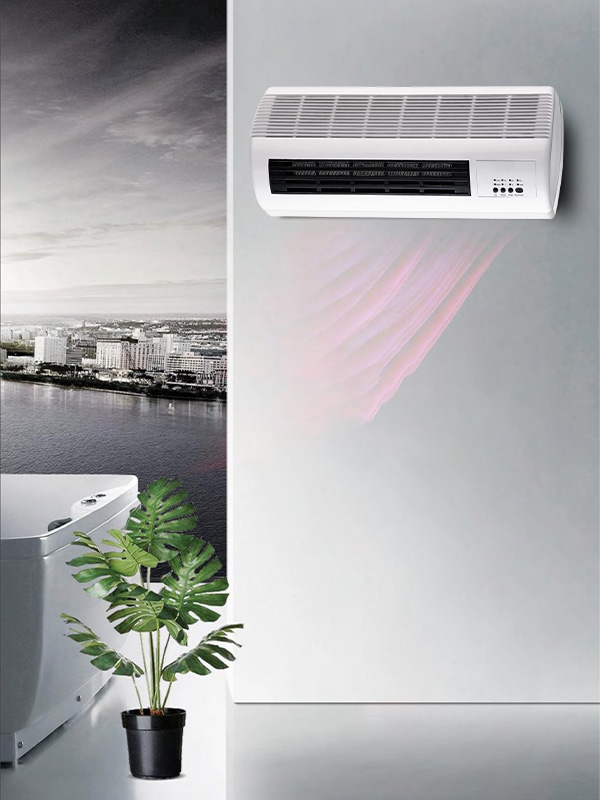 Custom BPT-2000B 4501/4501L/4501L-ERP Wall Mounted Electric Ceramic Heater With Cixi BEILIGE Electric Appliance Co., Ltd is China BPT-2000B 4501/4501L/4501L-ERP Wall Mounted Electric Ceramic Heater With LED display Su...View Product →
To end with a simple method, choose a wall heater by asking four key questions:
Confirm the circuit as well: a 1500W heater draws about 12.5 amps, so it needs a dedicated or lightly loaded 15-amp circuit. If you are doing the installation yourself, follow clearance requirements and use proper brackets. The steps are covered in our guide on how to install a wall-mounted fan heater.
In the end, no single wall heater type is best for every home. Convection panels suit quiet spaces, radiant panels suit focused heat, fan-forced PTC units suit speed and compactness, and hydronic panels suit long-duration comfort. When you narrow down the type, check the safety features and wiring requirements before purchase. If you are buying for a retail line or project, buying from a factory with serious commitment to quality makes the specification work easier. For more background, you can view our company background and quality controls to understand how the heaters are built and tested.
How Wall Heaters Work: Wall-Mounted PTC vs Fan Heater Technology Guide
2026-08-12Tower Heaters and Electricity Use: Do They Cost a Lot to Run in Reality?
2026-08-26Your email address will not be published. Required fields are marked *
Copyright © Cixi BEILIGE Electric appliance Co.,Ltd. All Rights Reserved